at
door heater
Today on Toothpaste For Dinner: door heater
The Worst Things For Sale is Drew's blog. It updates every day. Subscribe to the Worst Things For Sale RSS!

Posted by Victoria Strauss for Writer Beware®
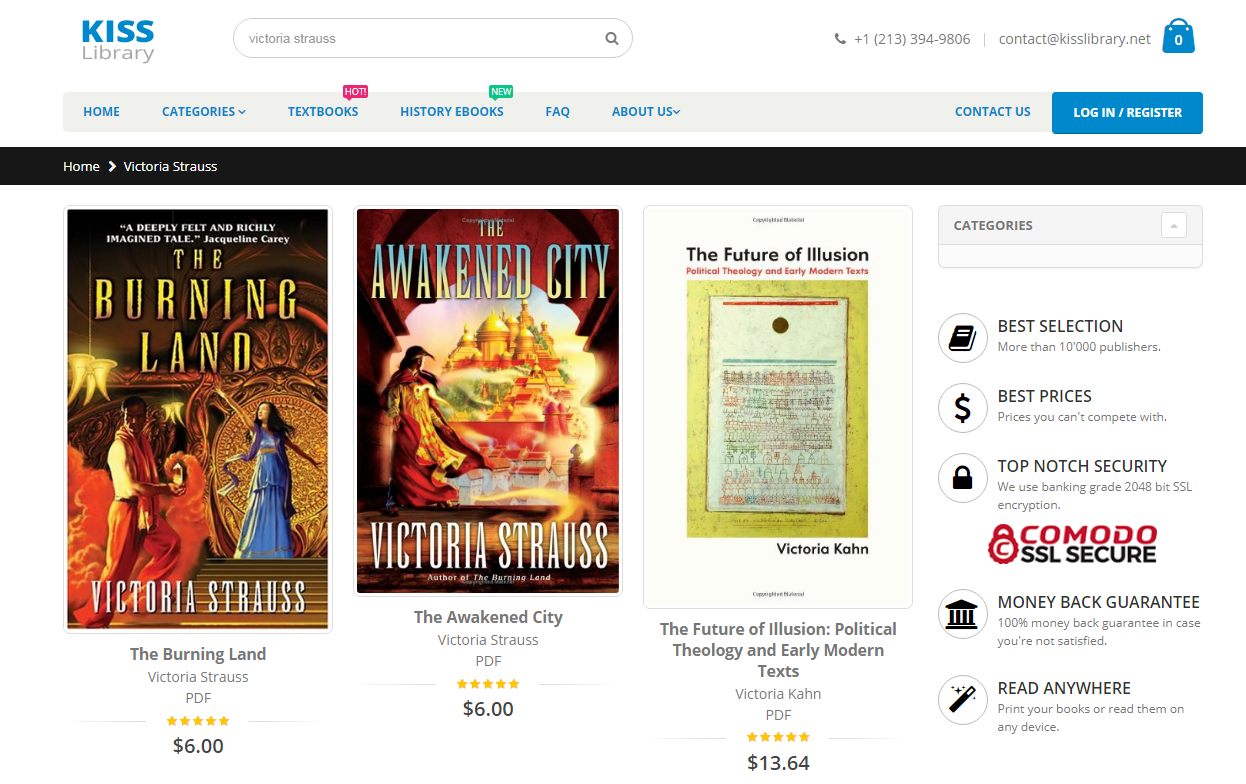
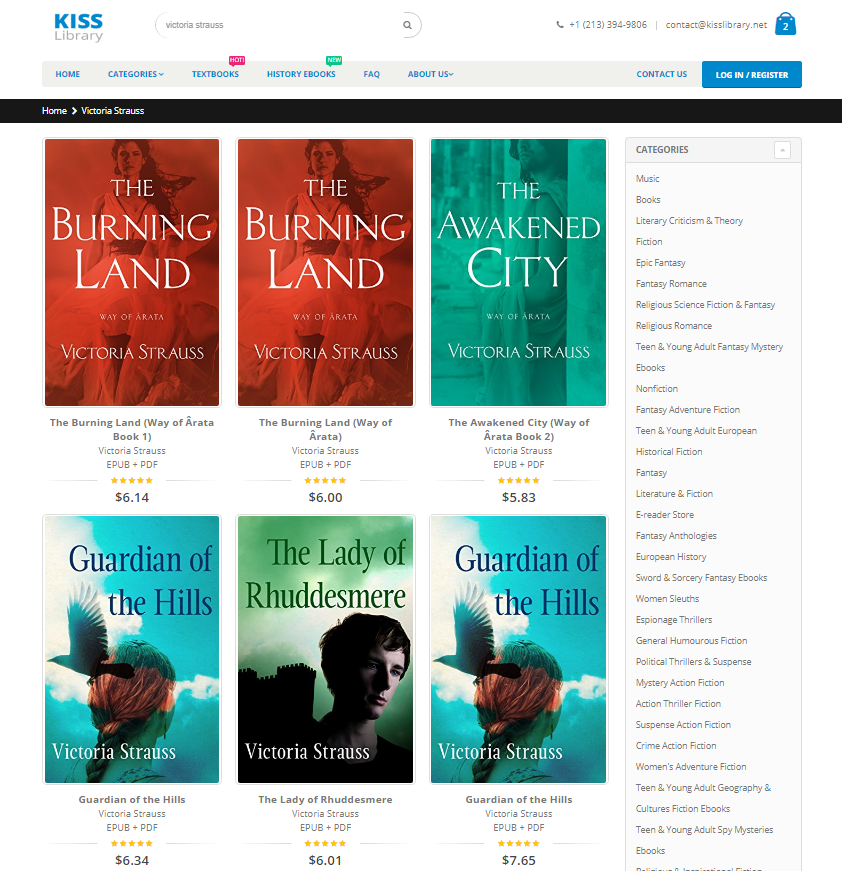
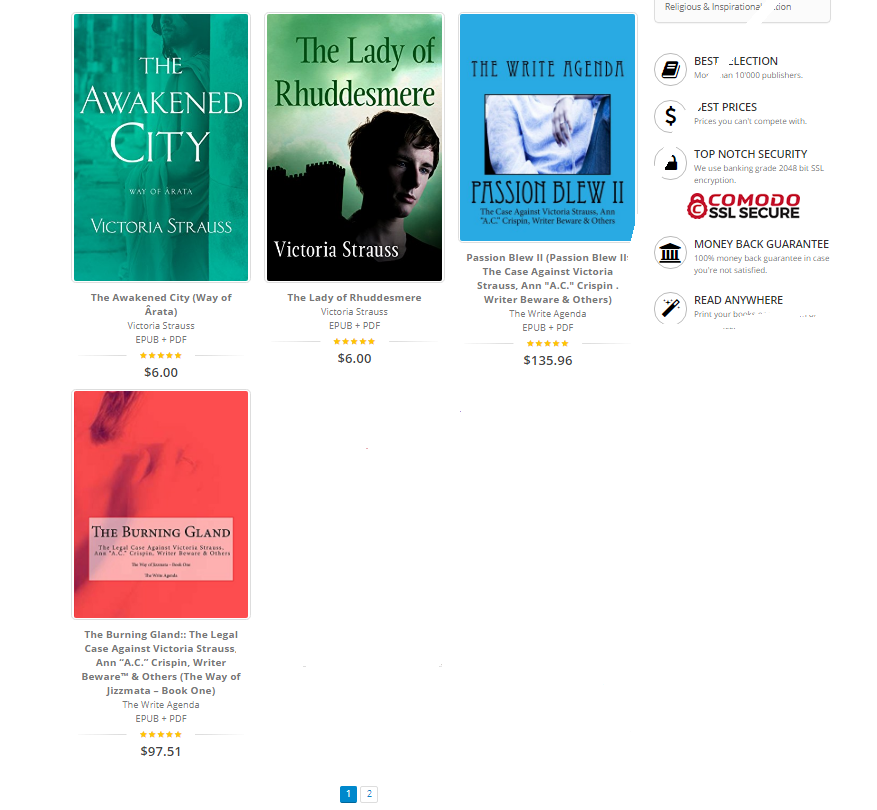
I've gotten several alerts over the past week about a pirate site that's new to me (though not new: this warning was first published in September 2017): Kiss Library, where many authors are finding unauthorized electronic versions of their books.
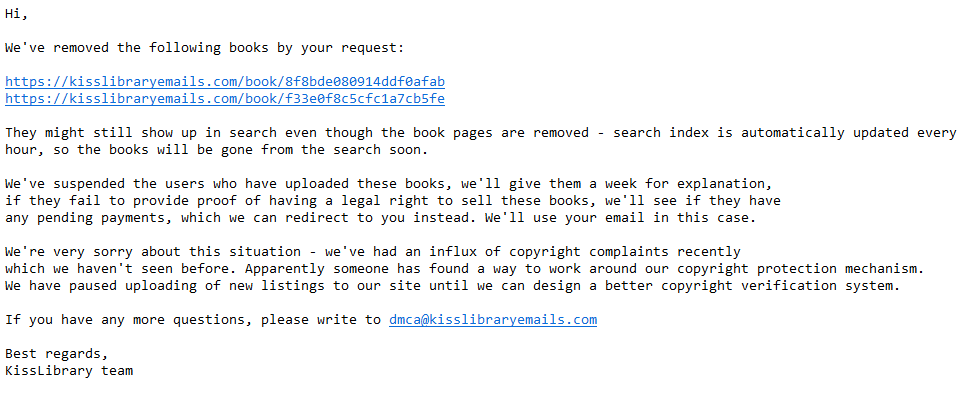
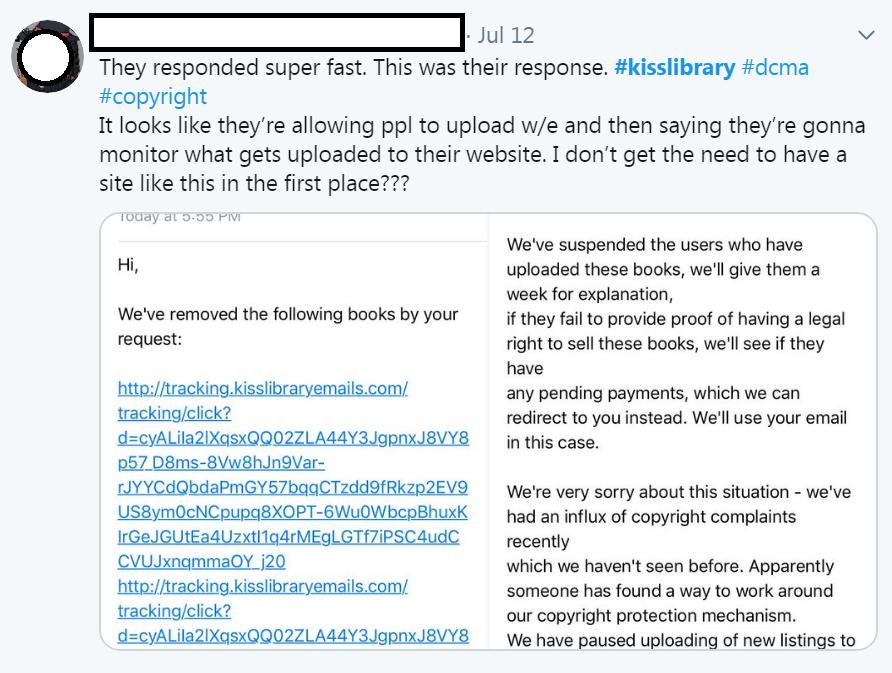
Kiss Library differs from the typical pirate site in a couple of ways. Unlike, say, Ebook Bike, run by serial copyright thief and "information wants to be free" ideologue Travis McCrea, it doesn't simply offer pirated books for free download, but appears actually to be selling them. Also unlike Ebook Bike and other pirate sites, it seems to promptly respond to DMCA notices.
I found two of my own books listed.
An interesting fact is that they actually don't even have the books they are selling! The catalog is automatically generated from indexing Amazon author pages.— DMCA | Anti-Piracy Service | Pirat.io (@pirat_io) August 8, 2019
We know this because we tried to buy a clients ebook out of curiosity..
So if you visit the site, be careful. Send the DMCA if you find your books, but don't try to test the system by buying anything.Exactly! This why we tried to purchase one of our authors eBooks to see if they could deliver the content.— DMCA | Anti-Piracy Service | Pirat.io (@pirat_io) August 8, 2019
We never received anything. -Eric
So maybe there's no content on the site--just book covers--and all they're doing is taking the money and running.Hi Victoria, sorry for the late reply. I wanted to ask the dev and legal dpt. regarding this. The website didn't seem to be hosting any phishing or malware. Its just an elaborate scheme profiting from pirated content. We also used a dummy PayPal account for this testing. -Eric— DMCA | Anti-Piracy Service | Pirat.io (@pirat_io) August 9, 2019
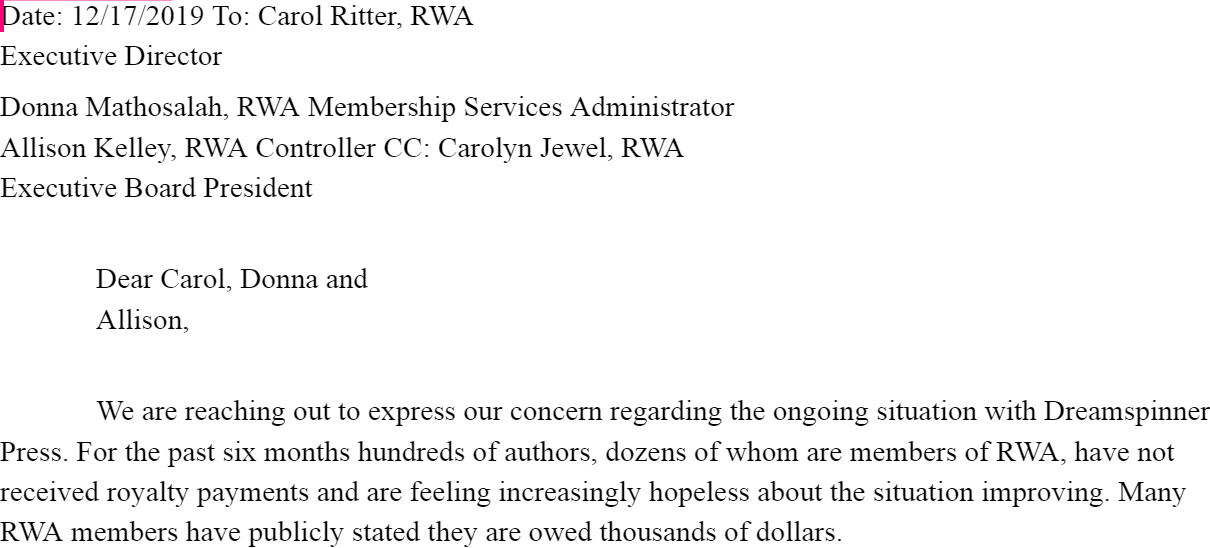
Dreamspinner Keeps Promising Authors to "Catch Up What Everyone Is Due" In PaymentsWriter Beware has been receiving similar complaints about late royalty and advance payments and confusing/conflicting explanations for the delays, with some authors saying they are owed four- and even five-figure amounts. According to a number of authors who contacted me, these problems have become more acute in the past few months, but they aren't new: periodic payment delays, with attendant excuses, began as much as two years ago.
Romance publisher Dreamspinner Press has not been paying royalties in timely fashion, authors have been reporting online, at least partially confirmed by emailed updates from the company that have been shared. Earlier this summer, authors posted on Twitter that the publisher had been inconsistent with payments for over a year, including delays in issuing both first quarter and second quarter 2019 royalties. In June, author TJ Klune posted, "Out of the last 8 quarters, this is the fourth time payments have been late, and the second in which I am owed penalties for said lateness." (Klune had said in March he would part ways with Dreamspinner after delivering three more books.) Author Suki Fleet posted, "I'm not waiting on a lot--but what I am waiting on is from foreign royalties paid to Dreamspinner this time *last* year, that I had to specifically ask for."
That month authors began announcing requests to revert their rights, a trend that continued over the course of the summer. There was some controversy within the romance community over whether authors withdrawing their work could cause the publisher to fail (or fail faster), in which case no one would get paid. Criticism extended to authors who supported the publisher as well, even though they were owed money.
Multiple agents PL spoke to said they were no longer doing business with Dreamspinner, except to negotiate their clients' rights back. They told us that acquisitions at the publisher had dwindled over the past year, confirmed by the sharp drop in PM deal reports, with Dreamspinner acquiring mostly from their existing authors, many of whom are unrepresented.
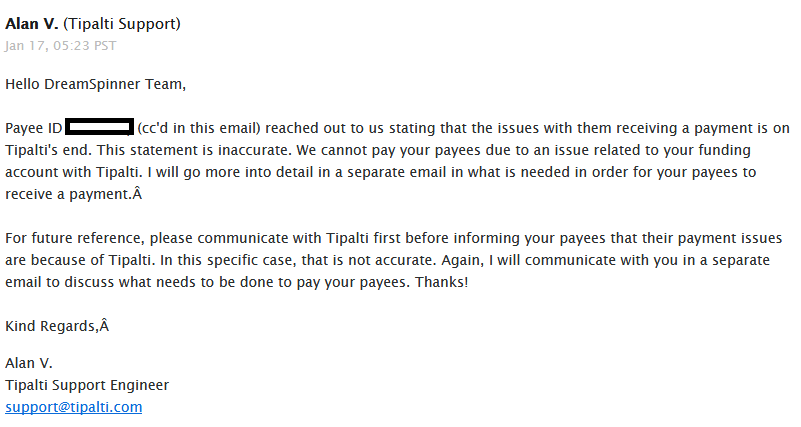
Dreamspinner provided authors a number of explanations in weekly emails, including writing that they had "not received payments from Amazon for UK or EU currencies," that they were awaiting deposits from "vendors," and that the late payments had been caused by a software glitch. In their latest update on September 4, the publisher said that they are anticipating a small business loan that will enable them to issue payments, and that they "can't offer a firm payment date to catch up what everyone is due." The email goes on, "With every set of deposits we receive, we've been sending payments, and we are continuing to respond as best we can to author requests." They added that they can't provide proof of the impending loan that authors have asked for because, "legal and banking documents are confidential and can't be posted online."
Meanwhile, authors including Indra Vaughn, Avon Gale, Jeff Adams, Will Knauss, CJane Elliott, Meredith Shayne, Tia Fielding, and many more have requested rights back. Fielding wrote on Facebook, "In the last year or so, they've repeatedly been more or less late in royalty payments." TJ Klune wrote in an email to the company that he posted on Twitter, that he is owed $27,448 in royalties and plans to involve a lawyer. A Facebook group of 75 former DSP authors has formed for people who have pulled their books or are considering it.
RWA has offered support for authors who have experienced trouble with Dreamspinner. They said in an August 21 statement: "We're aware of the situation, and members who need professional relations assistance, should contact memberadvocacy@rwa.org to reach our staff professional relations manager." Dreamspinner did not respond to PL's request for comment.
When you have to explain yourself by saying "We want to make clear that this isn't bankruptcy", it's not generally a good sign.And here's the latest Dreamspinner update. Um. Yeah. Financial restructuring. pic.twitter.com/dYjZaXKgrt— Anna Zabo (@amergina) December 28, 2019
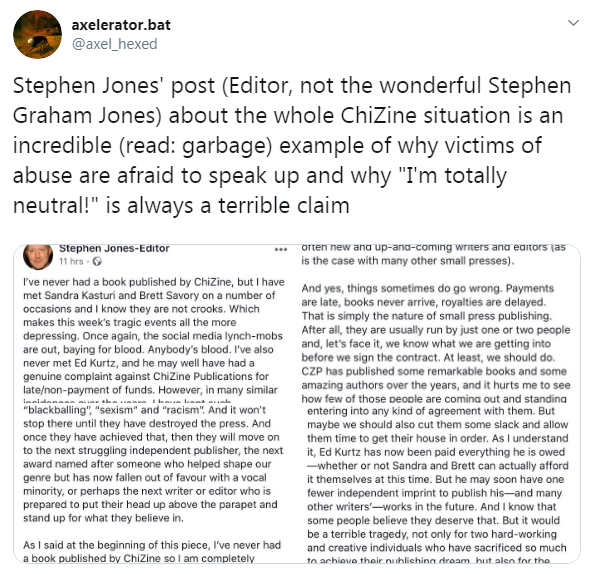
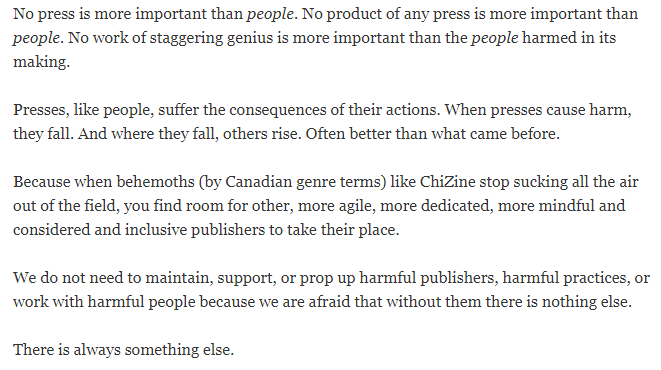
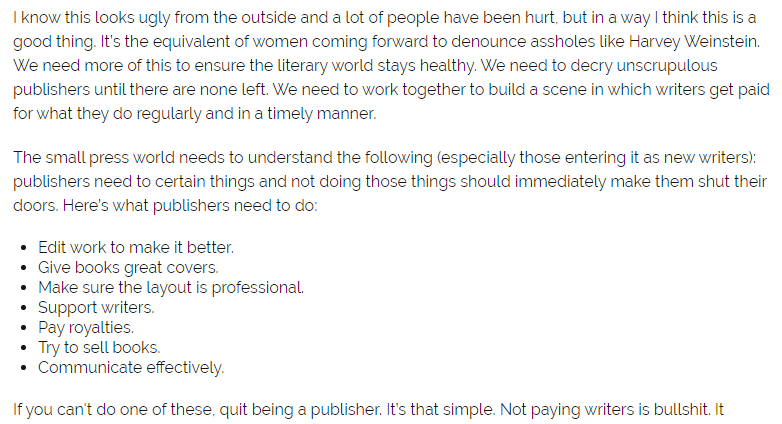
The statement from Chizine neglects a number of salient facts, such as the moment in July 2018, at Necon, when I explained to Brett Savory that my partner was facing a layoff, our cat was ill, we were in severe financial distress, and I had *never* been paid a single cent of royalties in what was at that time almost two years for a moderately successful book. He actually grinned and said, "Things are hard for everyone right now" before walking away. The following morning it was reported to me that Sandra was loudly complaining in the dealer room about me having asked about my royalties, and of course the two of them went on a whirlwind trip around the world a few weeks after that, showing us all that things weren't so rough for them, after all.Kurtz's experience was not isolated.
In fact, I'd asked after my royalties several times and was rebuffed or given excuses every single time (usually something wrong with their accounting software or something similar, which I later learned they’d been saying to authors for years). I only went to the HWA after several other frustrated CZP authors (one of whom hadn't been paid in five years!) strongly encouraged me to do so. I expressed fear of bullying and/or retaliation, and some of these authors promised me they'd have my back (they didn't). And yes, a lot of us got paid through my efforts, though it is untrue I'm paid in full. I was never paid royalties for the months of my first year of publication, 2016, though CZP continues to claim I was. I just gave up on this.
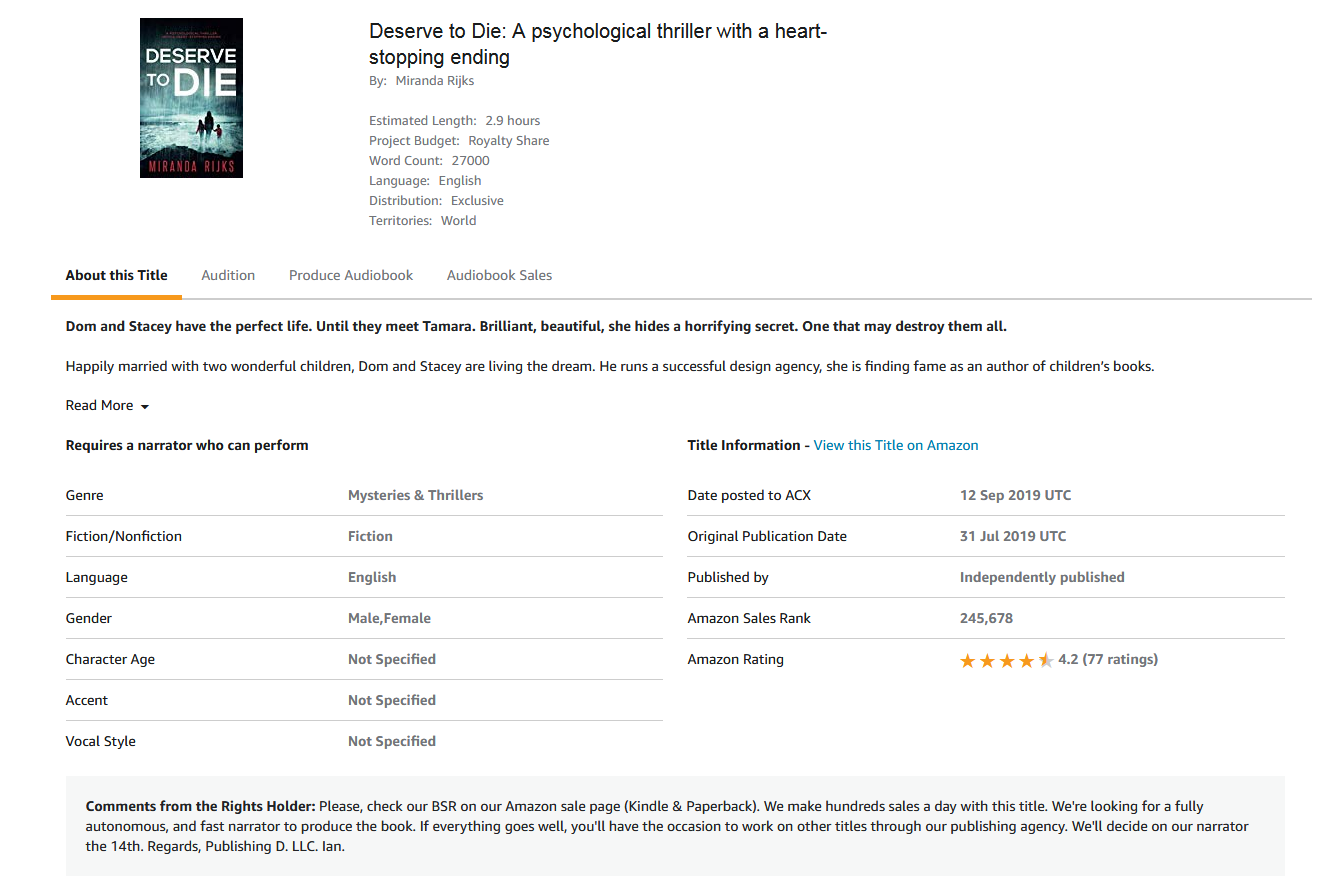
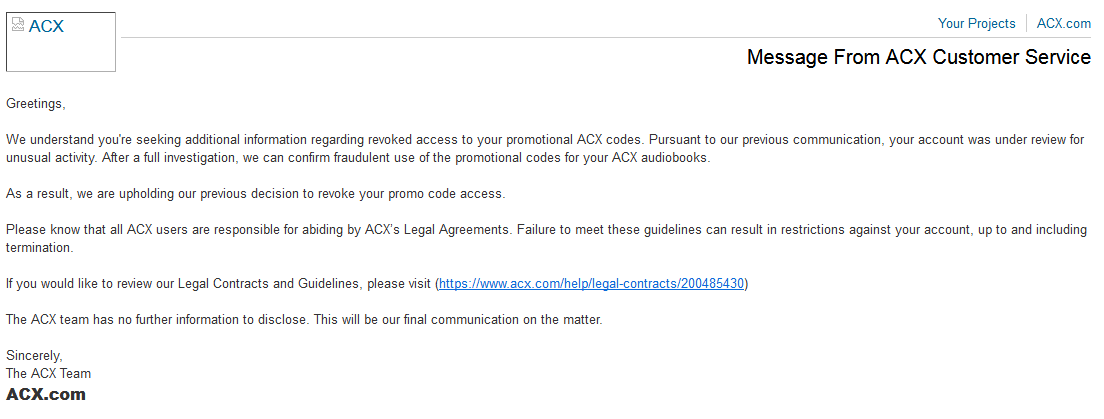
About the ACX thing...I was contacted by ACX to narrate three books, however, the person who offered the contracts kept emailing and frantically telling me to send them my book codes. I got leary and called ACX. They said unfortunately there are many scams taking place where if a book is "unclaimed" in their system, someone may grab it and offer it as an audiobook contract. Then they keep the codes and blackmarket sell them. They do not pay the narrators. Many other authors are experiencing it, they said, but they have no way to regulate it.
I declined the offers and got a nasty note from the contract holder. I was also told that since I corresponded with them, they had my email that is associated with Amazon..the same one. So, ACX said I had to go change my email on Amazon or they would have access there too. Geez.
WA should be on your watchlist, too. An AB5-like bill was just re-introduced in the Senate there, even though it had been defeated last year. It, too, requires writers and other freelancers and independent contractors be hired as employees when their works contribute to the normal business of their clients. The bill ignores a study of independent contractors that was prepared by the Dept of Commerce after the bill's defeat. The study documents that 3/4 of the independent contractors in WA don't need or want the employee benefits touted by the bill's advocates. Between their own efforts and those of their families and friends, they're doing fine. Read the study yourself then write to Sen. Karen Keiser about your opposition to being made employees against your will.A similar law may be in the works in Illinois.
The study: https://app.leg.wa.gov/committeeschedules/Home/Documents/26113?//20902
Senator Keiser: karen.keiser@leg.wa.gov
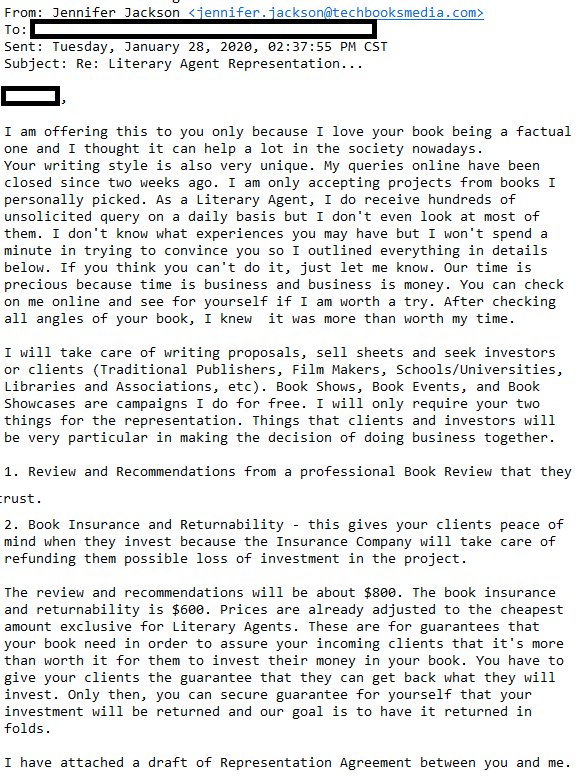
A surreal and ghastly experience. Someone has been contacting authors and taking my name (and my agency's name) in vain. Some details of what's been happening (and more): https://t.co/0M2HXf9E9V— Jennifer Jackson (@arcaedia) February 7, 2020
I've personally been in contact with many of the authors that have reached out to DMLA. They've been generous and understanding. It's just broken my heart to hear them recount having an opportunity like this extended under false pretenses.— Jennifer Jackson (@arcaedia) February 7, 2020
The more I've heard, the more horrid I've felt. While these authors are the targets, this person is also using me and my agency to exploit their hopes. Part of me feels like a victim too.— Jennifer Jackson (@arcaedia) February 7, 2020
One of these authors told me they were sick of the corruption in publishing. Our whole industry gets hurt by things like this.— Jennifer Jackson (@arcaedia) February 7, 2020
Offers of rep are exciting - for both authors and agents. It can be heady and wonderful. It's okay to pause. It's okay to ask questions. People who really believe in you will give you time to do that.— Jennifer Jackson (@arcaedia) February 7, 2020
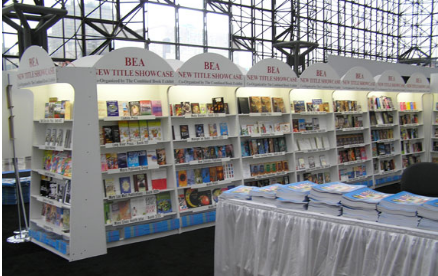
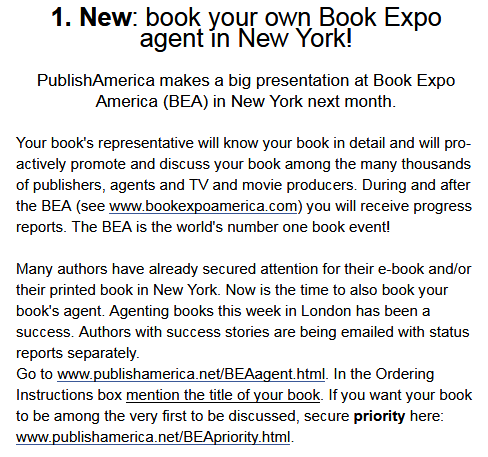
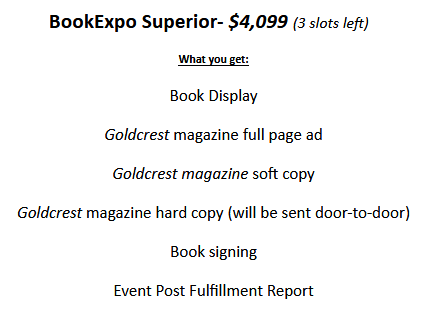
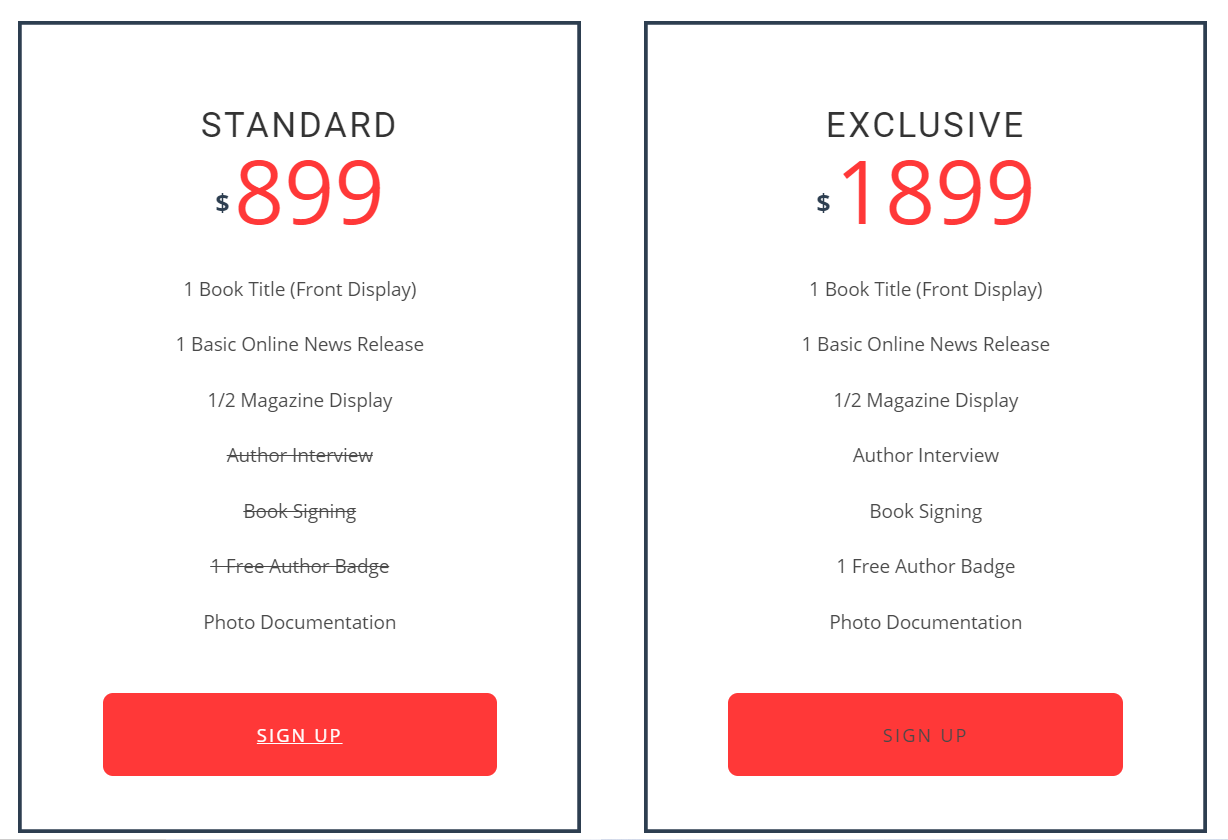
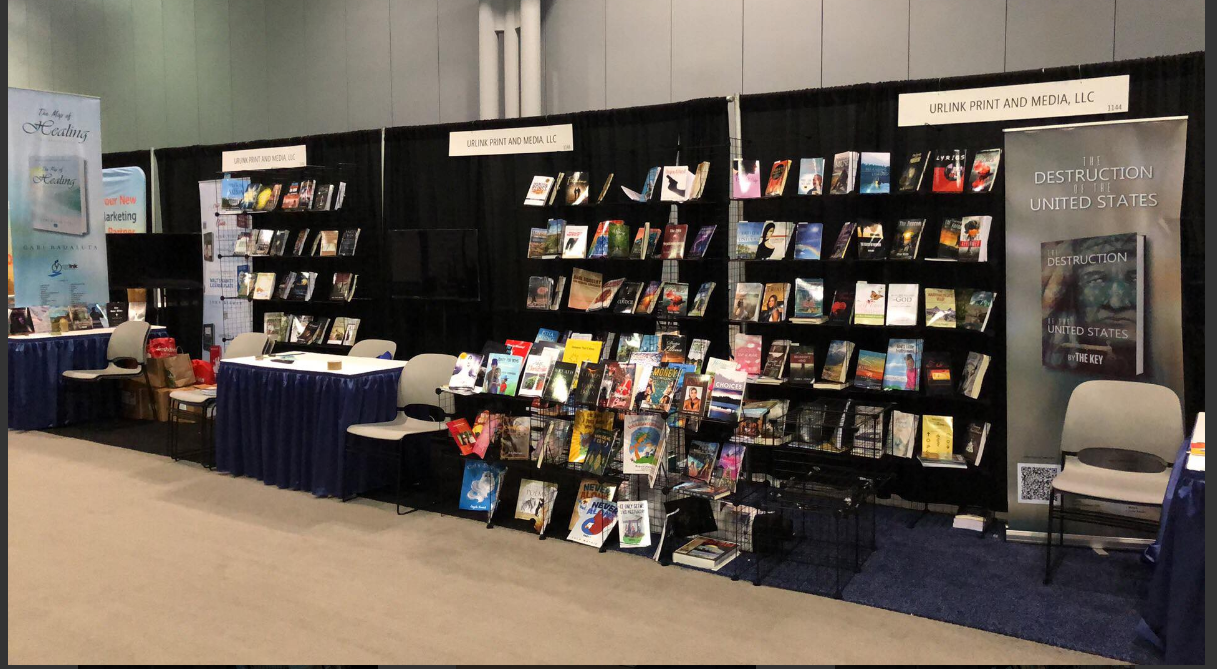
Aside from the Author Market [a designated area of the exhibit floor where self-published authors can buy display space], there are a handful of opportunities for authors to get visibility for their work at BEA. As far as I’m concerned—as someone who attended this show for 10 years, mainly as an editor with a traditional publishing house—it is not worth the investment. Here’s why.I'll add a fourth consideration: You will likely be hugely overcharged, especially by companies that sell book fair packages, or re-sell the exhibit services of others.
The emphasis of the show is on traditional publishing, rights sales and pre-publication marketing, and does not favor indie title promotion. It is a New York industry event where traditional publishing insiders talk to other traditional publishing insiders. Yes, there are librarians and booksellers, but they’re rarely paying attention to the places where an indie book may be showcased or promoted.
Nobody is going to notice your book there. Your book is likely to be promoted with many other books, with no way of attracting attention even if someone did pause for a second within 50 feet of your book. Imagine setting a copy of your book down in the world’s largest book fair, and expecting someone to not only notice it, but be entranced by it so much they can ignore 10,000 other things happening at the same time.
If you—the author—are not present to advocate for it, your book doesn’t stand a chance. Services that offer to promote your book at BEA are rarely, if ever, hand-selling or promoting your book in a meaningful way. But they will be happy to cash your check and say that your book had a “presence” at BEA. If you want to satisfy your ego, go ahead. But it’s not going to lead to meaningful sales. (I challenge anyone in the comments to provide evidence that a self-published book gained traction at BEA because the author paid a fee to secure placement—and the author was not present.)
Dear ________,A number of the cancellations affected books that had been completed, turned in, and scheduled for publication, with some authors having already made promotional plans. Others interrupted series whose first installment hadn't yet been published--with Henery holding on to the yet-to-be-published book and reverting rights to the rest. Cancellation of a series before it's completed can be tough--another publisher may not want to buy into a series mid-stream, and while followup titles can be self-published, it's difficult to promote a series when it's split up like this.
Before entering 2020, we felt it prudent to review future projections for _______ series, taking into consideration recent releases and overall performance. To provide an unbiased professional opinion and guidance in our 3-year strategic plan, we hired a consulting firm with experience in the industry. This allowed us to analyze not only your specific series, but also the competitive landscape and industry as a whole.
Unfortunately the sales of _______ series do not justify the publication of future titles beyond 2020. We know this is disappointing. The market has become beyond saturated (especially in mystery fiction), with all leading indicators pointing to even more intense competition for consumer dollars in the next cycle and beyond....
Although we don’t have a pathway forward with your new titles, we will continue to sell and support your backlist titles as usual under the terms of our original publishing agreement. To be clear, we will not be reverting the rights on any of your already published title(s), only future titles specifically outlined in the addendum to follow in the next week.
CDL relies on an incorrect interpretation of copyright’s “fair use” doctrine to give legal cover to Open Library and potentially other CDL users’ outright piracy—scanning books without permission and lending those copies via the internet. By restricting access to one user at a time for each copy that the library owns, the proponents analogize scanning and creating digital copies to physically lending a legally purchased book. Although it sounds like an appealing argument, the CDL concept is based on a faulty legal argument that has already been rejected by the U.S. courts.For a more detailed deconstruction of CDL's arguments, see this statement from the Association of American Publishers.
In Capitol Records v. ReDigi, the Second Circuit held that reselling a digital file without the copyright holder’s permission is not fair use because the resales competed with the legitimate copyright holder’s sales. It found that market harm was likely because the lower-priced resales were sold to the same customers who would have otherwise purchased new licenses. In this regard, the court emphasized a crucial distinction between resales of physical media and resales of digital content, noting that unlike physical copies, digital content does not deteriorate from use and thus directly substitutes new licensed digital copies.
The same rationale applies to the unauthorized resale or lending of ebooks. Allowing libraries to digitize and circulate copies made from physical books in their collection without authorization, when the same books are available or potentially available on the market, directly competes with the market for legitimate ebook licenses, ultimately usurping a valuable piece of the market from authors and copyright holders.
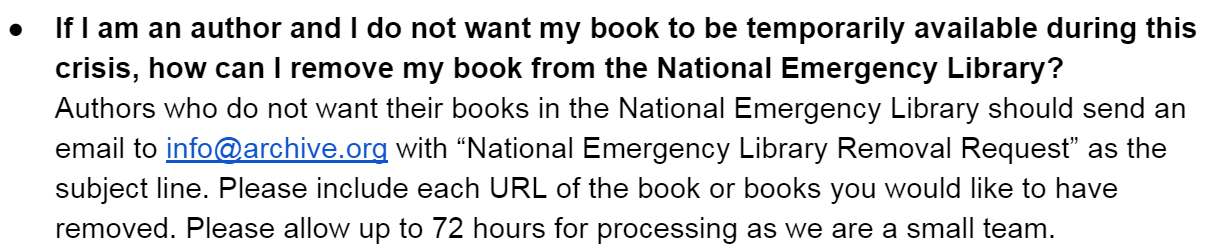
To address our unprecedented global and immediate need for access to reading and research materials, as of today, March 24, 2020, the Internet Archive will suspend waitlists for the 1.4 million (and growing) books in our lending library by creating a National Emergency Library to serve the nation’s displaced learners. This suspension will run through June 30, 2020, or the end of the US national emergency, whichever is later.What this boils down to, under all the high-flying verbiage: the IA is ditching the one-user-at-a-time restriction that is one of the key justifications for the theory of controlled digital lending, and allowing unlimited numbers of users to access any digitized book in its collection.
During the waitlist suspension, users will be able to borrow books from the National Emergency Library without joining a waitlist, ensuring that students will have access to assigned readings and library materials that the Internet Archive has digitized for the remainder of the US academic calendar, and that people who cannot physically access their local libraries because of closure or self-quarantine can continue to read and thrive during this time of crisis, keeping themselves and others safe.
IA is using a global crisis to advance a copyright ideology that violates current federal law and hurts most authors. It has misrepresented the nature and legality of the project through a deceptive publicity campaign. Despite giving off the impression that it is expanding access to older and public domain books, a large proportion of the books on Open Library are in fact recent in-copyright books that publishers and authors rely on for critical revenue. Acting as a piracy site—of which there already are too many—the Internet Archive tramples on authors’ rights by giving away their books to the world.Here's just one concrete example. Katherine Harbour's Nettle King is available for borrowing in the National Emergency Library as a scan, an EPUB, and a PDF (the IA's EPUB versions are OCR conversions full of errors). Published in 2016, it's also "in print" and available on Amazon and other online retailers as an ebook, in addition to other formats. The IA, which never bought a digital license to Ms. Harbour's book and scanned and uploaded it without permission, now is proposing to allow unlimited numbers of users to access it, potentially impacting her sales. How is this any different from a pirate site?
[U]sing the Coronavirus pandemic as an excuse, the Archive has created the “National Emergency Library” and removed virtually all controls from the digital copies so that they can be viewed and downloaded by an infinite number of readers. The uncontrolled distribution of copyrighted material is an additional blow to authors who are already facing long-term disruption of their income because of the pandemic. Uncontrolled Digital Lending lacks any legal argument or justification.UPDATE 4/9/20: The Chairman of the US Senate Subcommittee on Intellectual Property, Thom Tillis, has sent a letter to the Internet Archive, pointing out the many voluntary initiatives by authors, publishers, and libraries to expand access to copyrighted materials, and expressing concern that this be done within the law.
I am not aware of any measure under copyright law that permits a user of copyrighted works to unilaterally create an emergency copyright act. Indeed, I am deeply concerned that your "Library" is operating outside the boundaries of the copyright law that Congress has enacted and alone has the jurisdiction to amend.The letter ends by punting "discussion" until "some point when the global pandemic is behind us." So, basically, carry on and maybe at some point we'll talk.
In an early analysis of the use we are seeing what we expected: 90% of the books borrowed were published more than ten years ago, two-thirds were published during the twentieth century. The number of books being checked out and read is comparable to that of a town of about 30,000 people. Further, about 90% of people borrowing the book only looked at it for 30 minutes. These usage patterns suggest that perhaps that patrons may be using the checked-out book for fact checking or research, but we suspect a large number of people are browsing the book in a way similar to browsing library shelves.But this is hardly a compelling argument. Large numbers of these books are certainly still in copyright, and many are likely still "in print" and commercially available (in digital form as well as hardcopy). Just because a book was published more than ten years ago or prior to 2000 doesn't magically cause it to become so hard to find it must be digitized without permission in order to save it. "But they're older books" sidesteps, rather than addresses, the thorny copyright issues raised by the IA's unpermissioned scanning and digitizing.
Here’s a new holiday card design for this year! I have only a limited supply of them, but the choices on offer for Wondermark holiday cards are myriad. This year, I am not making a printed 2020 calendar. What I have done, though, is re-issued four of my previous calendars (from 2013, 2014, 2015, and […]
Locate S,1 “After the Final Rose” The first time I heard this song was the first time I saw Christina Schneider and Locate S,1 perform live last year, when they were opening for Of Montreal at the Bell House. I was immediately blown away by the verse melody – “women in love, women in airplanes […]
Pokus “Pokus Two” The best way I can describe Pokus aesthetic is that it’s like if the rhythm section of Fugazi was playing with a keyboard player who sometimes sounded a bit like Sun Ra when he was messing around synthesizers and overdriven electric organs in the late ’70s and other times was more along […]
Muzz “Bad Feeling” Muzz is a new band by Paul Banks from Interpol, but despite the fact that he sings and plays guitar in this band, they do not sound much like Interpol. Banks still sings as he would normally, but without having to lock into the tight rhythms that define that band’s aesthetic. Whereas […]
Little Simz “Might Bang, Might Not” I love the way Little Simz’ vocal performance in this song feels like she’s competing with the beat, like she’s trying to outpace it or outlast it. I imagine it like an elaborate tap dance routine, fast and precise in its movements. It would be enough to carry the […]
Setiap orang pasti akan mengikuti suatu kebiasaan yang memang dari dulu sudah tercipta di negaranya tersebut. Misalnya saja kebiasaan orang Indonesia, yang dimana sering kali mengejar layangan yang sudah putus (kaum anak kecil, secara turun temurun masih menggunakan kebiasaan ini ), lalu kebiasaan melakukan tindakan seperti ” Salim..” setiap hari ke Orang yang lebih tua […]
The post Indonesia Mah Lewat, Kebiasaan Ini Cuma Ada Di Rusia!! appeared first on anni-sanni.com.
In last week’s midterm elections, Democratic and progressive political candidates flipped red House districts, key state legislative bodies, governors’ offices, and even Senate seats in Nevada and Arizona. We’ve elected one of the most diverse Congressional classes in history, with historic numbers of women and LGBTQ representatives, including the first Muslim and Native American women […]
Walking down the hallway at school, an administrator stopped me in my tracks. I felt her eyes glare from the top of my head, past my torso and down my legs. She told me that my shorts were too short and that she didn’t want to see me wearing them ever again. I felt embarrassed […]
The last few weeks have seen Virginia racked by government scandals, including Democratic Gov. Ralph Northam and Attorney General Mark Herring’s histories with blackface, and allegations of sexual assault against Lt. Gov. Justin Fairfax. Democratic Party leadership has since swiftly called for the resignations of Northam and Fairfax — demands that some on both sides of the aisle […]
It occurs to me that, if I were better at marketing myself, I’d be writing and sending out press releases titled, “New York Times Number One Best Selling Audiobook Narrator […]
America had come together, setting aside all of our own wants and needs, to engage in the single greatest act of human kindness in history. We all stayed home, at […]
Last night, during dinner, my son did the math and figured out we’ve been staying home together for seven weeks. That’s a long time, but it also feels like we […]
A Modest Proposal is brilliant, biting, hilarious satire, that is as horrifyingly relevant in 2020 as it was in 1729. This reads like one of those brilliant editorials from The […]