on

News: Guest Strip - Steve Conley

Scott R. Kurtz: Today's guest strip was created by none other than smilin' Steve Conley, and I adore his take on my characters. I've known Steve for years, and have wonderful memories of both SPX and the Baltimore Comicon hanging out after the show and talking shop. Steve was a pioneer in syndicating web-content and has always been a little bit ahead of the curve. I've always been impressed with his art, his writing, and his ability to discover new ways to distribute his comics. His current book, The Middle Age, continues this trend. It's hilarious, sweet and gorgeous. Steve is creating the entire book


on

A Walk Among The Tombstones.

Yesterday I went looking for a homeless person who probably wasn’t going to accept any help.  “Have you seen this person?” I asked two DPW workers doing landscaping in a nearby park.  “Try the supermarket,” one of them told me. “Might be there. Walks around town all day.”  “Thanks.”  I’d parked my car next to […]

The post A Walk Among The Tombstones. appeared first on Waiter Rant.


on

Universal Book Solutions: Anatomy of a Book-to-Screen Scam


Posted by Victoria Strauss for Writer Beware®

Selling film rights to Hollywood is among writers' most fevered dreams. And where there is something that writers want or need, there are always sharks waiting to take advantage.

The Hollywood book-to-screen "marketing" package was pioneered by Author Solutions, way back in the early 2000s. All the Author Solutions imprints offer it, including the imprints AS runs for publishers. Here's what the package looks like, from AS imprint Xlibris:
  • Hollywood Ticket: coverage by a "professional reader." Cost: $999.00.
  • Hollywood First Act: a synopsis, "critical analysis", and "45- 60-second teaser Book Video" for "catching film executives' attention". Cost: $2,999.00.
  • Hollywood Director's Cut: an 8-10 page treatment by a "professional screenwriter", plus "consideration" by Author Solutions' "first-look Hollywood partner". Cost: $3,899.00
  • Hollywood Producer's Pick: this is the big kahuna, a full screenplay written by a screenwriter, plus consideration by AS's first-look partner. Cost: $16,299.00. Note that the screenplay is based on "your approved Hollywood Treatment", which you must previously have purchased--so the real cost of this option is $20,198.00.
Although a handful of other assisted self-publishing companies have offered similar packages over the years (here's the one from Bookstand Publishing, for instance; Outskirts Press also had one for a time, though it seems to have been discontinued), Author Solutions hasn't faced a lot of competition in the high-priced Hollywood dream exploitation business--primarily, I'm guessing, because of the cost and coordination involved in providing the coverage, critiques, treatments, and screenplays to the authors who buy them.

That's changed recently, though.

An explosion of book-to-screen "services" has hit the internet, courtesy of the Author Solutions copycat scams that I've been writing about so much lately (there's a complete list in the sidebar). Author Reputation Press, Coffee Press, Dream Books Distribution, Media City Publishers, Paramount Books Media, Book Art Press, New Reader Media, BookVenture, Pearson Media Groups, MatchStick Literary, and more all offer some version of the Author Solutions book-to-screen package, either on their websites or in their (extremely aggressive) phone and email solicitations.

The value of any book-to-screen package is highly debatable, regardless of who provides it. Vendors of such "services" play on authors' dreams of making it big, while failing to provide any kind of realistic information about the extreme unlikelihood of success. Most books never sell or option film rights (they're among the subsidiary rights least likely to be exploited, even for successful authors with top-flight agents), and it's far harder to sell a screenplay than it is a book manuscript. For most authors, the most probable result of buying a book-to-screen package is a smaller bank account.

And that's assuming that the vendor actually provides the advertised services, and doesn't just take the money and run. Author Solutions, at least, does seem to produce the coverage, etc., it sells, in a reasonably literate manner (you'll see some examples if you read on)--though of course, like paid reviews, the critiques and coverage are likely to be customer-friendly--that is, unrealistically positive.

The copycats, on the other hand...they don't exactly have the greatest track records for quality, reliability, or service. Or honesty.

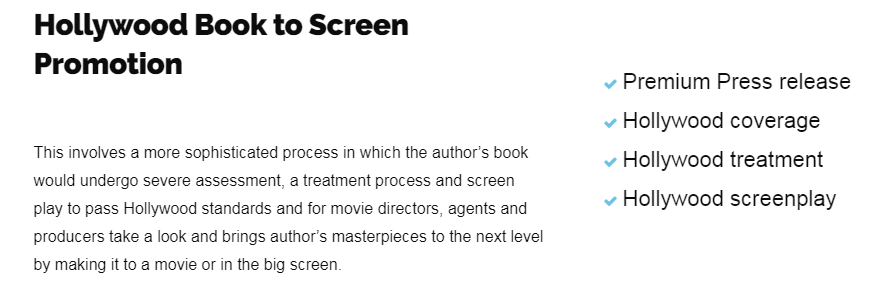
An example: Universal Book Solutions, which styles itself "a Book-to-Screen Marketing Professional, with years of experience in working for motion picture projects for producers, agents, directors, and major studios in Hollywood." As usual with the Author Solutions copycat scams, there's no information that would allow you to verify any of these claims--no list of owners or staff, no company history, no examples of successful projects. That's no accident, of course.

A sensible person might also wonder about the quality of written materials produced by a "Book-to-Screen Marketing Professional" that puts out website text like this (English-language lapses are one of the markers for the copycat scams):


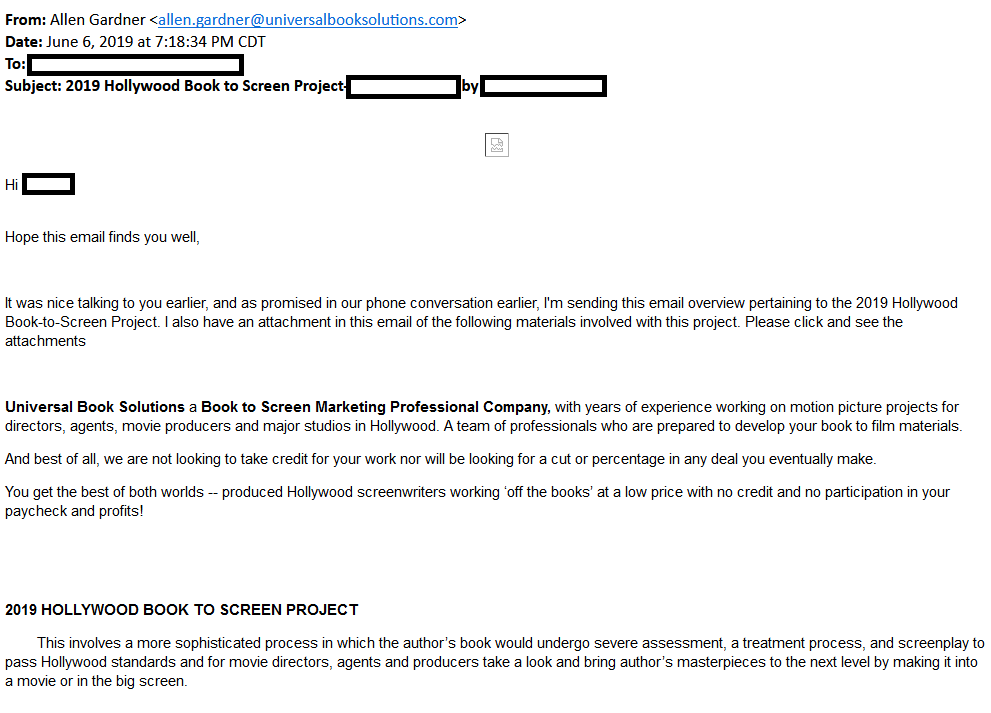
Here's how UBS's slightly more literate email pitch begins (I've seen two of these now, and they're identical):

The email goes on to detail the services on offer--news release, coverage, treatment, and screenplay--in language that has been lifted directly from the Xlibris (and other Author Solutions imprints) book-to-screen package. As further inducement, a bunch of glowing--and conveniently unverifiable--quotes are appended at the end. Turns out that these too have been lifted, though from a different (and, in its way, equally questionable) source.


Anonymous testimonials are the best kind, right?

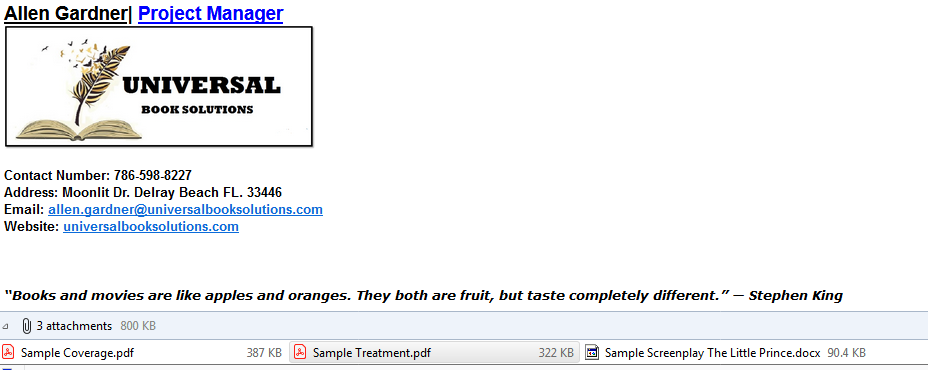
Last but not least, UBS includes several attachments--supposedly, examples of its work:


"Sample coverage" is this. Looks surprisingly literate and detailed, doesn't it? But wait. Here it is again...on the iUniverse website (the book was published by another Author Solutions imprint). Ditto for UBS's "sample treatment:" here's what UBS sent. Here it is at iUniverse (which also published the book in question).

(As for The Little Prince screenplay, I can't find any evidence of it online, but given all the other borrowing, it's sure to have been snitched from somewhere.)

So...a plagiarized book-to-screen package, promoted with plagiarized text, further promoted with plagiarized testimonials, and finished with sample documents produced by others and falsely presented as UBS's work. If you hand over your money to these folks (neither of the authors I heard from went far enough into the process to get a price), what do you think the odds are of getting any of the promised products?

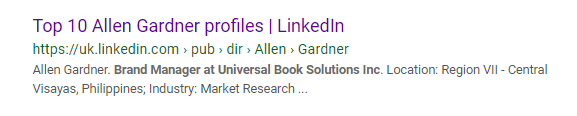
Universal Book Solutions claims a Florida address (per a Google search, it's a private residence in what looks like a condo community), but has no business registration in that state. Its web domain was registered just last February. As for Allen Gardner, Project Manager, guess where he's located.
UBS is an especially egregious example of this increasingly common scam. But as noted above, there are many others, and they are aggressively soliciting authors, especially those who have published with Author Solutions imprints, small presses, and pay-to-play companies like Christian Faith Publishing and Page Publishing. Be on your guard, and if you hear from a company that wants to take you to Hollywood--for a price--remember that if it sounds too good to be true, it probably is.

For a much more realistic discussion of the book-to-screen process, see Jane Friedman's excellent article, How a Book Becomes a Movie. Scroll down to the final comments to see one from a writer who was solicited by Universal Book Solutions.


on

Authors' Concern Grows Over Late Royalty Payments at Dreamspinner Press

&

Posted by Victoria Strauss for Writer Beware®

Scroll down for updates

On Wednesday, September 11, Publishers Lunch published an article by Erin Somers about payment issues at Dreamspinner Press, which I'm reprinting here with permission.
Dreamspinner Keeps Promising Authors to "Catch Up What Everyone Is Due" In Payments

Romance publisher Dreamspinner Press has not been paying royalties in timely fashion, authors have been reporting online, at least partially confirmed by emailed updates from the company that have been shared. Earlier this summer, authors posted on Twitter that the publisher had been inconsistent with payments for over a year, including delays in issuing both first quarter and second quarter 2019 royalties. In June, author TJ Klune posted, "Out of the last 8 quarters, this is the fourth time payments have been late, and the second in which I am owed penalties for said lateness." (Klune had said in March he would part ways with Dreamspinner after delivering three more books.) Author Suki Fleet posted, "I'm not waiting on a lot--but what I am waiting on is from foreign royalties paid to Dreamspinner this time *last* year, that I had to specifically ask for."

That month authors began announcing requests to revert their rights, a trend that continued over the course of the summer. There was some controversy within the romance community over whether authors withdrawing their work could cause the publisher to fail (or fail faster), in which case no one would get paid. Criticism extended to authors who supported the publisher as well, even though they were owed money.

Multiple agents PL spoke to said they were no longer doing business with Dreamspinner, except to negotiate their clients' rights back. They told us that acquisitions at the publisher had dwindled over the past year, confirmed by the sharp drop in PM deal reports, with Dreamspinner acquiring mostly from their existing authors, many of whom are unrepresented.

Dreamspinner provided authors a number of explanations in weekly emails, including writing that they had "not received payments from Amazon for UK or EU currencies," that they were awaiting deposits from "vendors," and that the late payments had been caused by a software glitch. In their latest update on September 4, the publisher said that they are anticipating a small business loan that will enable them to issue payments, and that they "can't offer a firm payment date to catch up what everyone is due." The email goes on, "With every set of deposits we receive, we've been sending payments, and we are continuing to respond as best we can to author requests." They added that they can't provide proof of the impending loan that authors have asked for because, "legal and banking documents are confidential and can't be posted online."

Meanwhile, authors including Indra Vaughn, Avon Gale, Jeff Adams, Will Knauss, CJane Elliott, Meredith Shayne, Tia Fielding, and many more have requested rights back. Fielding wrote on Facebook, "In the last year or so, they've repeatedly been more or less late in royalty payments." TJ Klune wrote in an email to the company that he posted on Twitter, that he is owed $27,448 in royalties and plans to involve a lawyer. A Facebook group of 75 former DSP authors has formed for people who have pulled their books or are considering it.

RWA has offered support for authors who have experienced trouble with Dreamspinner. They said in an August 21 statement: "We're aware of the situation, and members who need professional relations assistance, should contact memberadvocacy@rwa.org to reach our staff professional relations manager." Dreamspinner did not respond to PL's request for comment.
Writer Beware has been receiving similar complaints about late royalty and advance payments and confusing/conflicting explanations for the delays, with some authors saying they are owed four- and even five-figure amounts. According to a number of authors who contacted me, these problems have become more acute in the past few months, but they aren't new: periodic payment delays, with attendant excuses, began as much as two years ago.

Although Dreamspinner regularly sends out update emails (you can see an archive of these here), several authors told me they were having trouble getting responses from Dreamspinner CEO Elizabeth North.

Also of concern: in the midst of repeated payment delays, and despite its admissions of financial distress, Dreamspinner appears to be proceeding with sweeping expansion plans, including a shift to mass market paperback format, increasing the number of translations for the foreign market, and rolling out a new accounting and payment system (which several of the authors who contacted me told me they'd had trouble with). Multiple authors told me that they fear that author royalties, which Dreamspinner says go into an escrow account, are instead being used to finance company operations.

Authors' anger at the situation is growing. Meanwhile, Dreamspinner is still open for submissions. Writers who are considering approaching this publisher might want to hold off for the moment.

More information:

Tweets from authors Avon Gale, TJ Klune, Roan Parrish, KJ Charles (search "Dreamspinner" on Twitter to see many more).

Blog posts by authors Mary Winter, RJ Scott, Rhys Ford, TJ Klune.

Non-Dreamspinner author X. Marduk is compiling a Dreamspinner timeline, with lots of links to tweets and blog posts.

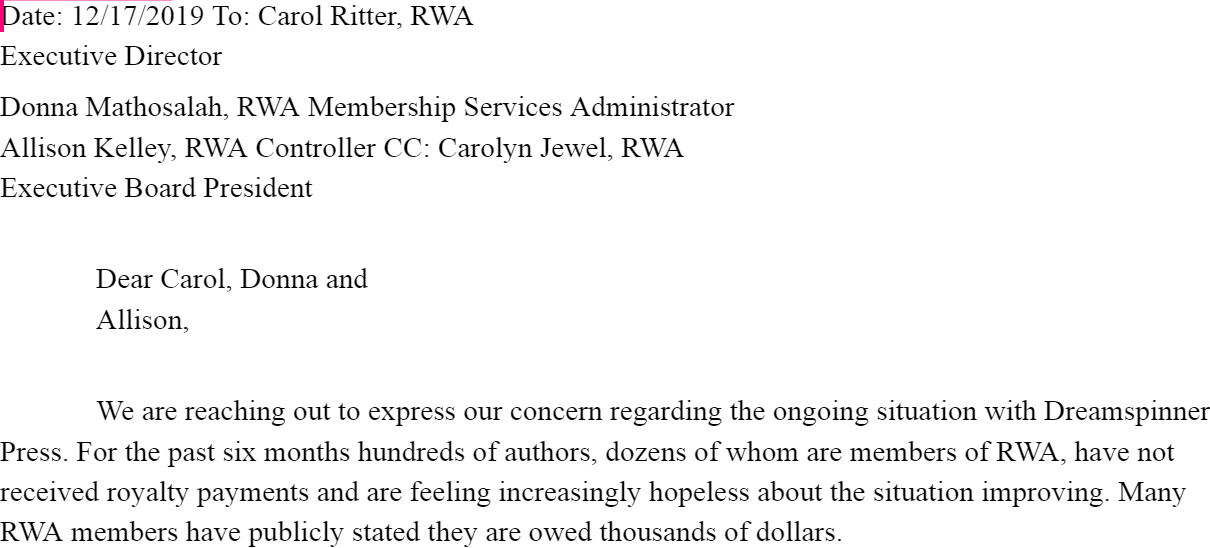
UPDATE 12/25/19: The payment problems at Dreamspinner appear to be ongoing. A group of Dreamspinner authors contacted RWA to request help:


You can read the entire letter here.

According to one of the letterwriters, RWA responded that there is nothing they can do. Dreamspinner's issues are now part of the implosion of Romance Writers of America, with writers increasingly furious over RWA's alleged foot-dragging in addressing complaints--not just about Dreamspinner, but generally.

UPDATE 12/28/19: Another of Dreamspinner's eminently reasonable-sounding but holy-crap-if-you-read-between-the-lines updates. (Summary, if you don't want to click on the tweet: they've hired a firm that specializes in financial restructuring to "develop a plan for 2020 and a structured repayment of all past due amounts." They promise to "be in touch with authors directly about their repayment schedule".)
When you have to explain yourself by saying "We want to make clear that this isn't bankruptcy", it's not generally a good sign.

UPDATE 1/16/20: I continue to hear from Dreamspinner authors who have not been paid. Some are owed thousands of dollars for the first three quarters of 2019, and have received no payment at all; some have gotten partial payment, or are owed for fewer quarters. Bottom line: Dreamspinner owes a crapload of money to its authors.

According to the latest update from Elizabeth North, "Payments for November have started posting. They will all be submitted through Tipalti [Dreamspinner's accounting software] by Friday, January 10." What this appears to mean--at least, as of this writing and based on the authors who have contacted me--isn't actual payment (as in, money in bank account), but a status change on Tipalti from "In Process" to "Submitted For Payment." Also, the payments are for November royalties only. Anything prior to that will be folded into the restructuring plan Dreamspinner says it is pursuing.

Other stuff:
  • Writers seem to be requesting rights reversion in droves. Many of them have multiple titles with Dreamspinner.
  • In some cases,Dreamspinner seems to be unilaterally charging certain fees or expenses or other amounts against what they owe individual writers--i.e., reducing royalties owed by whatever the amount of the expense is. I don't want to provide details here, because I don't want to risk identifying the writers.
  • The National Writers Union wants to hear from Dreamspinner authors who haven't been paid.
  • Dreamspinner is fully enmeshed in the implosion of RWA. Claire Ryan has an exhaustive timeline of the crisis that's tearing RWA apart, with references to RWA's anemic response to Dreamspinner authors' complaints, and allegations that recently-resigned RWA President and Dreamspinner author Damon Suede may not have been eligible for the office based on his actual publications.
One thing that's really striking to me in this whole mess is how, if you look at just one of Dreamspinner's announcements and updates, they sound so very businesslike and reasonable. It's only if you go back and read them all in sequence--as I just did--that the facade starts to crumble, with unmet deadlines, moving goalposts, and unfulfilled commitments.

Back in June, Dreamspinner was promising that "the remainder of outstanding royalties" were about to be released...but here we are in January 2020, and they still owe tens of thousands of dollars. In July, they promised that they were "in the final steps" with the Small Business Administration loan, and "estimated funding has been moved back to mid-August"...but as of January, the loan is still pending. Over the months from June through December, they promised repeatedly to get everyone paid (especially, again and again, royalties for Quarter 2)...and then, in December, they suddenly announced the hiring of a firm to re-structure the entire debt from October backward, with no details about the process, or even an end date for it. Presumably, this firm will want a fee...from a publisher that can't afford to pay its authors.

I get that it's tough out there for small presses. Things go wrong. Vendors are tardy. Loans fall through. Personal emergencies happen. But read from beginning to end, Dreamspinner's updates--so reasonable-seeming individually--start to feel like mere excuses. Together with authors' frustrations and complaints, they paint a really troubling picture.

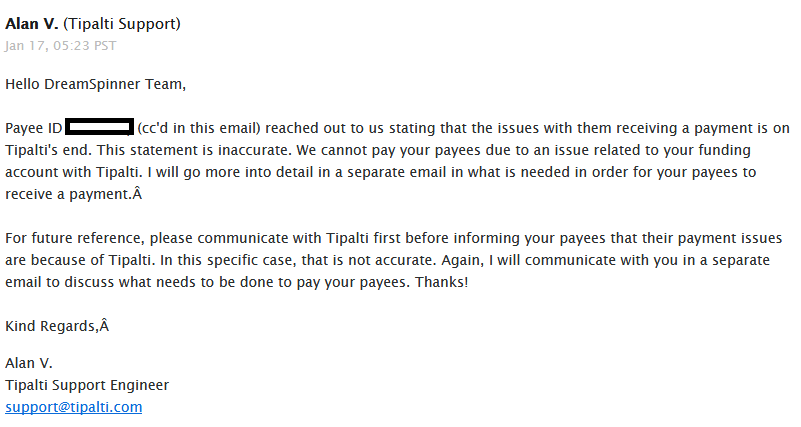
UPDATE 1/17/20: Re: all those November royalties that were to be released by January 10, and are currently listed in authors' Tipalti dashboards as "submitted" but not actually paid...this rather irate email from Tipalti to Dreamspinner in response to an author's inquiry about the delay suggests why nothing is landing in authors' bank accounts: Dreamspinner's payment account is not funded.


This is not good news. It's really starting to feel like there's some serious gaslighting going on here.

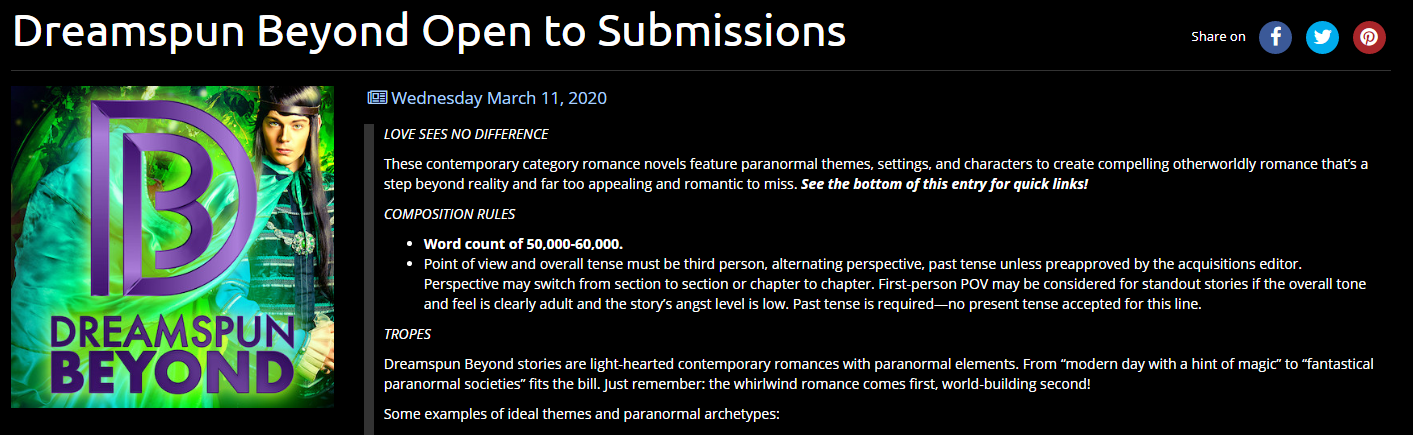
UPDATE 3/19/20: Dreamspinner has not provided an author update since January 7, and writers are still reporting that royalties are in arrears. Yet, amazingly, Dreamspinner is open to submissions:


Also seeking submissions: Dreamspun Desires.

Writer beware.


on

Fireside Press Cancels Multiple Contracts

Posted by Victoria Strauss for Writer Beware®

Last week, the SFWA Contracts Committee issued this advisory.
SFWA Contracts Committee Advisory on No-advance Contracts

Recently, SFWA's Contracts Committee was made aware of a situation in which a well-liked publisher canceled the publication of a number of books it had contracted to publish. The publisher said the decision was made because of "unexpected changes" at the company. The Committee has reviewed the contract in use, which lacked a provision for such a cancellation. The Committee believes that canceling a contracted book that satisfies the author’s obligations is at odds with the spirit of the contract. Making this situation worse is the fact that these were no-advance contracts. Because no advance was paid, the publisher could make this decision without financial penalties. The authors' books, were, in effect, put in limbo for many months and the authors received nothing but an apology. Besides depriving the authors of the ability to sell the books elsewhere during this delay and putting off any income from the books into the indefinite future, the authors careers suffer as a result.

Publishers of all sizes may find themselves unable to live up to their contractual commitments for a wide variety of reasons, some of which could not have been reasonably anticipated. Hence, the Contracts Committee urges writers to think carefully about signing a contract that provides no advance, or only a nominal advance, while tying up their work for a lengthy period of time. Critically, payment of an advance gives an indication the publisher actually has the financial resources to meet its obligations. Publishers who do not pay advances or pay only nominal advances should include language in their contracts specifying how they can cancel a book and what happens if they should cancel a book, including a specified amount of compensation to the author.

SFWA Contracts Committee
October 25, 2019

Legal Disclaimer: The contract alert should not be understood to be legal advice. The issues presented by contract law are complex. Authors should consult a competent attorney familiar with the business of publishing as well as contract law before signing any contract.
The publisher in question is Fireside Press.

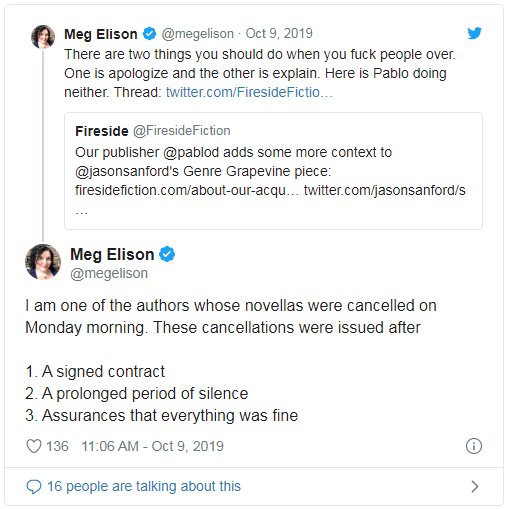
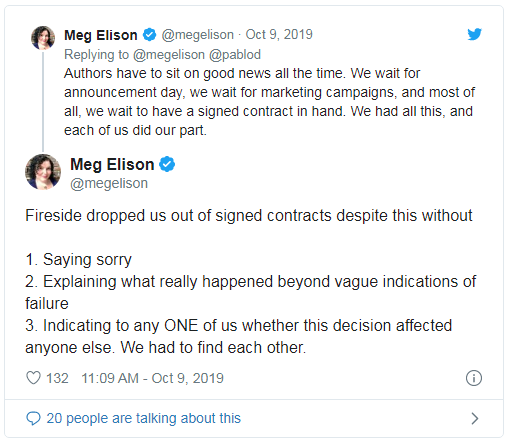
The cancellations were first reported on October 8 by Jason Sanford in his Genre Grapevine column, and discussed on October 9 in Mike Glyer's File 770. Fireside publisher Pablo Defendini issued a statement on October 8, in which he revealed that the five canceled contracts were for manuscripts that were "unpublished and unannounced", and attributed the cancellations to disruptions caused by editorial departures.

Author Meg Elison, one of the canceled authors, did not find this to be a sufficient explanation...and she was livid.


A few days later, Defendini issued an apology. "I can see now how [the cancellation emails] read as callous, uncaring, and dismissive of the authors’ feelings," he wrote. "I’m very sorry for that....My behavior was not consistent with Fireside’s values, and I deeply regret it."

Beyond the Contracts Committee's general warning about no-advance contracts (and if you're part of the small press world, you know how common these are): multiple simultaneous contract cancellations are not frequent or normal, and can signal trouble beyond whatever the publisher offers as an explanation (if it explains at all). Ditto for a publisher that suddenly starts offering to revert rights on request.

Fireside's situation also highlights the risks of signing with a publisher that's essentially a one-person operation (as Defendini admits in his apology). With the best will in the world, the publisher can be sidelined by a single bad event (personal or professional), leading to glitches, errors, and delays in scheduling, payment, and more. Writer Beware's files are stuffed with such stories.

Troubled publishers do recover, or at least hang on. Month9, which canceled dozens of contracts in 2016, is still publishing, as is Permuted Press, which axed an undisclosed number of titles in 2015 (both publishers cited overstocked lists, though in both cases there were other issues as well). In the short term, though, if a publisher is or has been actively shedding writers, it's best to hold off on submitting until it's clearer what's going on.


on

Contest Caution: The Sunday Times Audible Short Story Award


Posted by Victoria Strauss for Writer Beware®

Founded in 2010, The Sunday Times Audible Short Story Award bills itself as "the richest prize for a single short story in the English language." And indeed, the prize is major: the winner receives a cool £30,000 (no, I did not add extra zeroes.)

With judges yet to be finalized, the selection process will include a 20-story longlist announced in May 2020, a six-story shortlist unveiled in June 2020, and the winner revealed on July 2. The shortlisted stories will be published in an Audible audiobook, with included writers receiving "an extra £1,000 fee, on top of a prize payment of £1,000". To be eligible, writers must previously have had at least one work published in the UK or Ireland by an "established print publisher or an established printed magazine" (the Terms and Conditions include an extensive list of the kinds of publishers and magazines that don't qualify). The contest is open for entries until 6:00 pm on December 13.

You can read more about the award, including the prestigious judges who've participated and the well-known writers who've submitted stories, here.

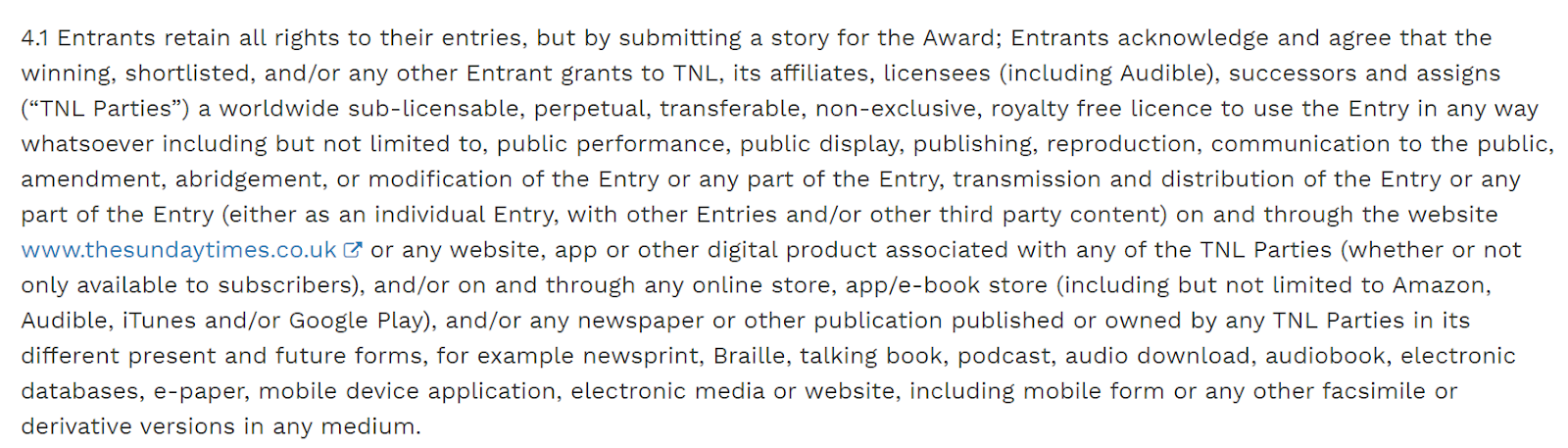
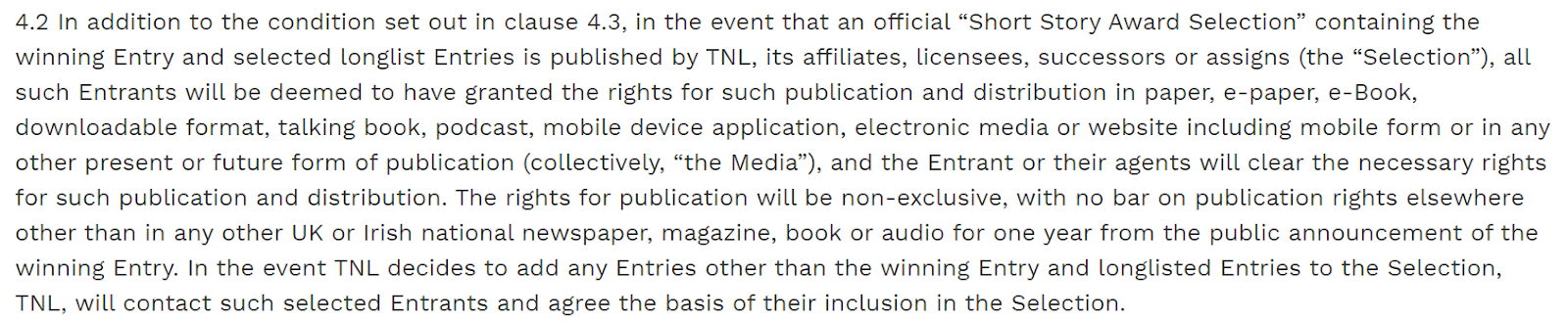
So what's the catch? -- because you know I wouldn't be writing this post if there weren't one. Well, as so often happens, it's in the Terms and Conditions. Specifically:


To summarize this dense paragraph: simply by entering the competition, you are granting a sweeping, non-expiring license not just to Times Newspapers Limited (The Sunday Times' parent company), but also to Audible and any other licensees of TNL, to use your story or any part of it in any way they want, anywhere in the world, without payment to or permission from you.

This is far from the first time I've written about "merely by entering you grant us rights forever" clauses in the guidelines of literary contests, some of them from major publishers or companies that should know better. Sure, in this case the license is non-exclusive, so you could sell your story elsewhere--but only as a reprint, because by granting non-exclusive rights to one company, you remove your ability to grant first rights to another, at least for as long as the initial rights grant is in force.

It's not uncommon for literary contests that involve publication to bind all entrants to a uniform license or grant of rights--so that, when winners are chosen, the license is already in place. But ideally, the license should immediately expire for entries that are removed from consideration--or, if the contest sponsor wants to retain the right to consider any entered story for publication (as TNL clearly does--see Clause 4.2, below), rights should be released within a reasonable period of time after the contest finishes--say, three or six months. There's simply no good reason to make a perpetual claim on rights just in case, at some unspecified point in the future, you might just possibly want to use them.

Not to mention--why should Audible get to make this same claim?

There's a couple of other things to be aware of. Shortlisted authors enter into a 12-month exclusive contract with Audible, for which they are given a "one-off" lump-sum payment (the £1,000 noted above). But thereafter, Audible retains the right "to record, distribute and market such audio version for at least ten (10) years." Again, this right is non-exclusive--but there's no indication that Audible has to pay these authors for potentially exploiting their work for a decade. (If you don't consent to these terms, you can't be shortlisted.)


Finally, although publication is guaranteed only for the shortlist, TNL reserves the right to publish longlist and non-listed entries as well. Great! Except...there's nothing to suggest these writers would be paid either.


There's no question that this is a prestigious--and, for the winner, rich--award. But sober evaluation is definitely in order here. Enter at your own risk.


on

Scandal Engulfs Independent Publisher ChiZine Publications


Posted by Victoria Strauss for Writer Beware®

If you're not part of the horror or speculative fiction community, you may not be aware of the scandal that over the past two weeks has engulfed ChiZine Publications, a (previously) highly-regarded Canadian independent publisher.

In September of last year, several authors, including Ed Kurtz, made a complaint to the Horror Writers Association about long-overdue royalties at ChiZine. On November 5 of this year, after the complaint became public knowledge, CZP posted a statement on its Facebook page, claiming that Kurtz's royalties were "currently paid in full" and that "Any other monies he might be due will be paid on his next royalty statement". Kurtz's response, posted by his partner on Facebook a day later, was blistering:
The statement from Chizine neglects a number of salient facts, such as the moment in July 2018, at Necon, when I explained to Brett Savory that my partner was facing a layoff, our cat was ill, we were in severe financial distress, and I had *never* been paid a single cent of royalties in what was at that time almost two years for a moderately successful book. He actually grinned and said, "Things are hard for everyone right now" before walking away. The following morning it was reported to me that Sandra was loudly complaining in the dealer room about me having asked about my royalties, and of course the two of them went on a whirlwind trip around the world a few weeks after that, showing us all that things weren't so rough for them, after all.

In fact, I'd asked after my royalties several times and was rebuffed or given excuses every single time (usually something wrong with their accounting software or something similar, which I later learned they’d been saying to authors for years). I only went to the HWA after several other frustrated CZP authors (one of whom hadn't been paid in five years!) strongly encouraged me to do so. I expressed fear of bullying and/or retaliation, and some of these authors promised me they'd have my back (they didn't). And yes, a lot of us got paid through my efforts, though it is untrue I'm paid in full. I was never paid royalties for the months of my first year of publication, 2016, though CZP continues to claim I was. I just gave up on this.
Kurtz's experience was not isolated.

******

Between 2010 and 2015, Writer Beware received a handful of complaints (fewer than five) about ChiZine from authors who cited months-late royalty payments or long waits for contracts. Because the complaints were so few, and also because the authors all did eventually receive their payments or their contracts (though in most cases only after persistent prodding), it wasn't clear to me whether the tardiness indicated a pattern of problems, or was the kind of occasional glitch that can afflict otherwise reputable small presses with small staff and tight finances.

As it turns out, those few complaints were just the tiniest bubbles drifting up from what appears to be a roiling ocean of dysfunction.

Following Kurtz's public response, CZP authors and staff began to come forward with their own experiences--a tsunami of serious allegations including non-payment (some staff say they were never paid for years of work), extremely late or missing royalty payments (years in arrears in some cases; many authors report having to fight for what payment was received), erratically-produced royalty statements (CZP breached at least some of its own contracts by sending out royalties once a year instead of bi-annually--more on that below), missed pub dates, broken marketing promises, and financial mismanagement--especially concerning, since a big chunk of CZP's budget comes from grants and subsidies. (Former CZP staff member Michael Matheson has written a pair of illuminating posts on CZP's finances, including its treatment of grant money and habitual financial distress.)

Staff and authors also--in multiple, strikingly similar posts and complaints, including some received by Writer Beware--cite a toxic work culture that featured bullying, intimidation, sexual harassment, racism, gaslighting, and more. Several of those who contacted me told me that they felt CZP operated "like a cult," with charismatic leaders at the top who were admired and feared in equal measure, and whom many dared not defy.

This account only scratches the surface. For much more:
On November 11, CZP's founders, Sandra Kasturi and Brett Savory, posted a statement on the CZP blog and Facebook page indicating that they have decided to "step down." Although the statement mentions financial issues ("we have taken a short-term personal loan to bring payments up to date"), it doesn't address the many other complaints that have been leveled against the company--and, notably, does not include an apology.

The response has not been kind.

******

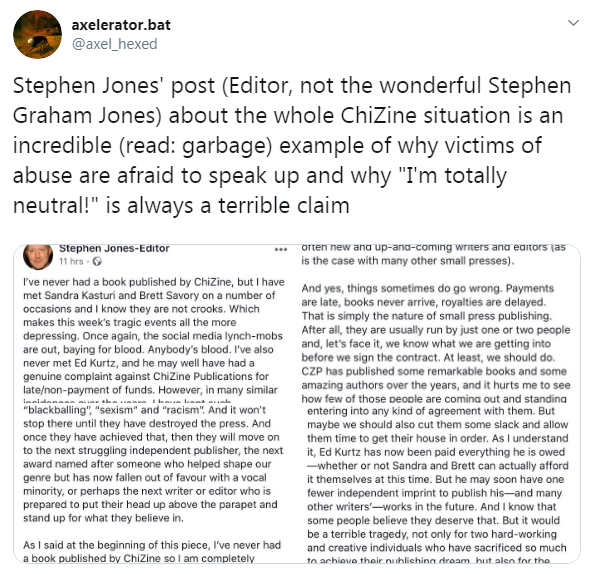
Despite all of the above, there are still those who continue to defend CZP, and to brush off the statements by writers and staff. For example, this, from editor Stephen Jones (Jones's post has been removed; this is a screenshot posted to Twitter):

What stands out for me here is not just the skepticism that whistleblowers always have to face (and which, even when the publisher doesn't try to intimidate or engage in reprisals, makes it so much harder for whistleblowers to come forward), but the defense of unprofessional business practice--not just by CZP but, apparently, by small press publishers in general. Small presses are doing something great for writers and readers, so we should "cut them some slack" when they fail to pay, or don't fill book orders, or miss a pub date, or engage in some other kind of behavior that has a negative impact on staff and authors. That's "simply the nature of small press publishing." Deal with it!

It's a really common argument. I can't tell you how often I've seen some version of it--not just from toxic or troubled publishers, but from the writers they are screwing over. But it is bullshit. Complete and utter bullshit.

No matter how "worthy" a publisher may be, that does not give it the right to abuse its writers or its staff--whether by accident or design. Publishers function in the realm of art, but they also need to function like businesses--not like cults of personality, not like sinecures, not like kitchen-table hobby projects where it doesn't really matter that they know little about publishing and have never run a business as long as they've got good intentions. You don't get a pass because you've got a noble goal. You don't get a pass because independent publishers are struggling and we need more of them. You don't even get a pass because you're putting out good books from disenfranchised authors. You need to run your business right, and treat your writers and your staff right, or you have no business calling yourself a publisher.

Which brings me to my next point. The scope and range of what has apparently been happening at ChiZine is bigger than usual (and having seen as many small press implosions as I have over the years, it's amazing to me that it took so long for the scandal to break). But it's important to emphasize that it is not an isolated occurrence. Contract breaches, financial malfeasance, even the kind of harassment and gaslighting and dictatorial behavior that CZP authors and staff describe--all are rampant in the small press world. Just go back through a few years of the entries on this blog, and you'll see plenty of examples.

I don't mean to tar all small presses with the same brush. There are, it's important to acknowledge, many small and indie publishers that operate with complete professionalism and do all they can to treat their authors right. But there is a huge, huge problem in the small press segment of the publishing industry, and we don't do writers--or readers--any favors in dismissing or downplaying or making excuses for it.

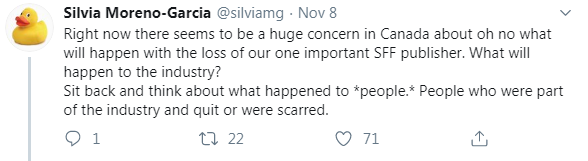
I'm not the only one who is making this point. Silvia Moreno-Garcia, who had payment issues with CZP and also has experience running a micro-press, addresses the issue in a Twitter thread:


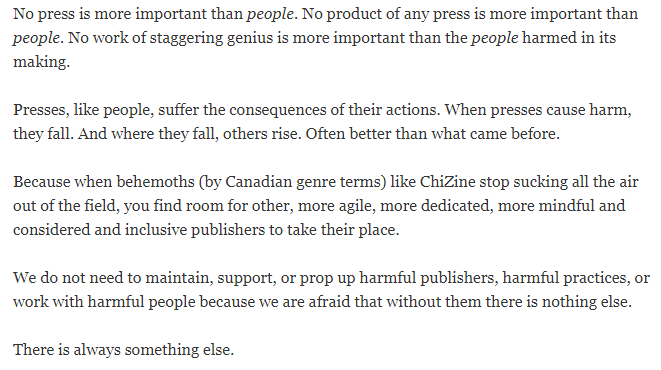
In a blog post, former CZP staffer Michael Matheson responds to those who would like to see publishers like CZP dealt with more kindly:

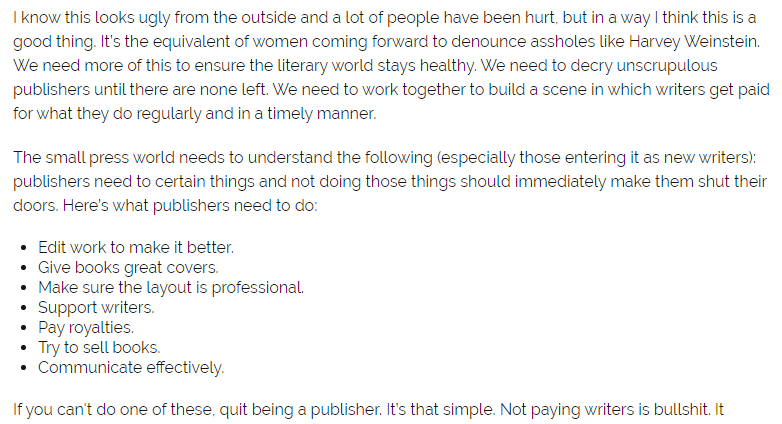
And, commenting on the Chizine situation, writer and reviewer Gabino Iglesias points out:


I agree 100%. But I'm not holding my breath.

******

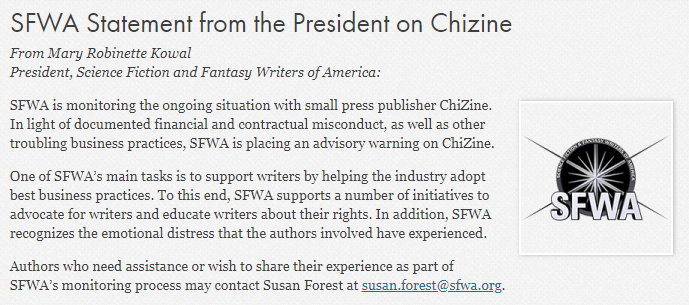
The scandal has unfolded very quickly but there've already been consequences. High Fever Books reports "a mass exodus" from CZP, with authors requesting rights reversions for their books, and withdrawing stories from CZP's forthcoming Christmas anthology. The Ontario Arts Council, one of CZP's funders, has recently removed CZP from its list of grant recommenders. And SFWA has issued a statement:


******

Finally, some semi-wonky publishing stuff.

There's been some discussion of irregularities with CZP's royalty statements. I've seen a number of these, kindly shared with me by CZP authors, and while they're somewhat of a chore to figure out and are missing some information that ideally should be present, the numbers do add up. However, a few things are sub-optimal.

- CZP's contract boilerplate empowers the publisher to set a "reasonable" reserve against returns. There are no specifics, so it's basically up to the publisher to decide what "reasonable" is.

For CZP, "reasonable" seems to mean 50%. This seemed high to me, so I did a mini-canvass of literary agents on Twitter. Most agreed that smaller is better--maybe 25-30%, though some felt that 50% was justifiable depending on the circumstances. They also pointed out that the reserve percentage should fall in subsequent reporting periods (CZP's remains at 50%, unless boilerplate has been negotiated otherwise), and that publishers should not hold reserves beyond two or three years, or four or five accounting periods (CZP has held reserves for some authors for much longer).

(If you're unclear on what a reserve against returns is, here's an explanation.)

- Per CZP's contract, royalties are paid "by the first royalty period falling one year after publication." What this means in practice (based on the royalty statements I saw) is that if your pub date is (hypothetically) April of 2016, you are not eligible for payment until the first royalty period that follows your one-year anniversary--which, since CZP pays royalties just once a year on a January-December schedule, would be the royalty period ending December 2017. Since publishers often take months to issue royalty statements and payments following the end of a royalty period, you'd get no royalty check until sometime in 2018--close to, or possibly more than, two full years after publication.

In effect, CZP is setting a 100% reserve against returns for at least a year following publication, and often much more. This gives it the use of the author's money for far too long, not to mention a financial cushion that lets it write smaller checks, since it doesn't have to pay anything out until after returns have come in (most sales and most returns occur during the first year of release).

I shouldn't need to say that this is non-standard. It's also, in my opinion, seriously exploitative.

- And...about that annual payment. It too is non-standard--even the big houses pay twice a year, and most small publishers pay quarterly or even more often. It's also extra-contractual--at least for the contracts I saw. According to CZP's boilerplate, payments are supposed to be bi-annual after that initial year-or-more embargo. The switch to annual payment appears to have been a unilateral decision by CZP owners for logistical and cost reasons, actual contract language be damned (I've seen documentation of this).

- A final wonky contract point: CZP's contract boilerplate mentions royalty payments (as in, they're bi-annual)--but does not, anywhere, mention royalty statements.

A publishing contract absolutely needs to bind a publisher not just to pay, but to account royalties on a regular basis (whether or not payments are due). If there's no contractual obligation for the publisher to provide royalty accounting, it may decline to do so--and that's not theoretical, I've gotten more than a few complaints about exactly this. Just one more reason to get knowledgeable advice on any publishing contract you're thinking of signing.