an
i hope no one can tell
Today on Toothpaste For Dinner: i hope no one can tell
The Worst Things For Sale is Drew's blog. It updates every day. Subscribe to the Worst Things For Sale RSS!

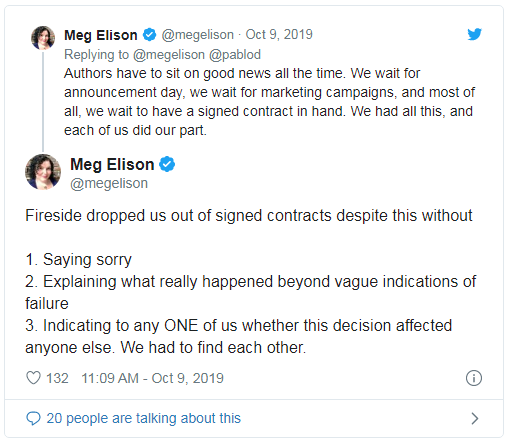
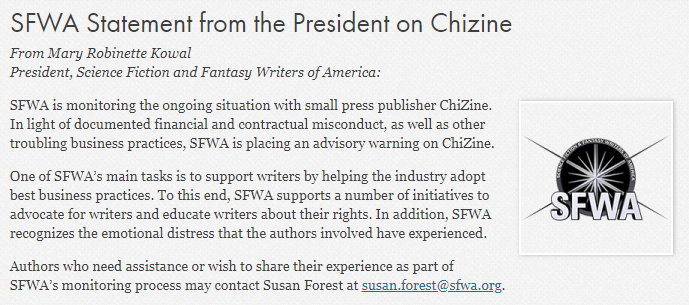
SFWA Contracts Committee Advisory on No-advance ContractsThe publisher in question is Fireside Press.
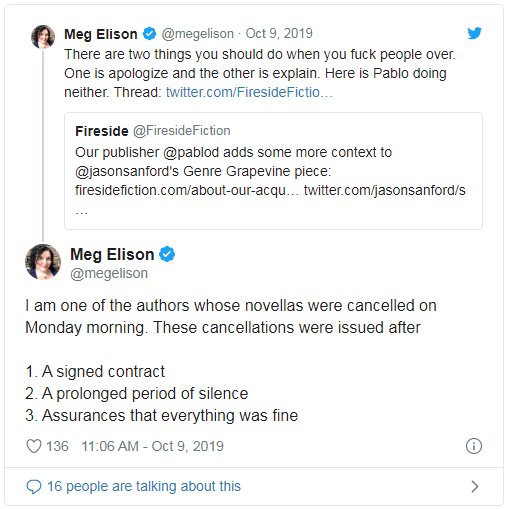
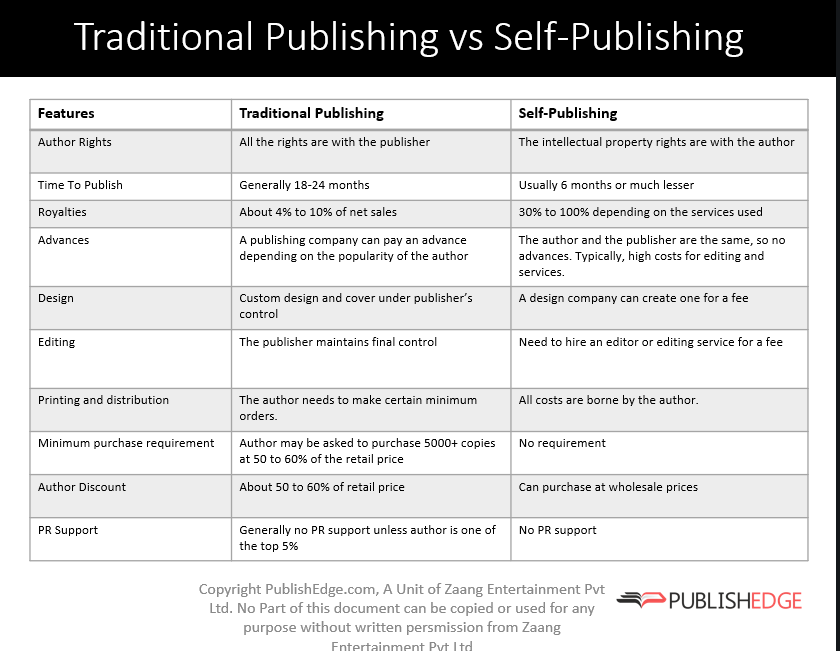
Recently, SFWA's Contracts Committee was made aware of a situation in which a well-liked publisher canceled the publication of a number of books it had contracted to publish. The publisher said the decision was made because of "unexpected changes" at the company. The Committee has reviewed the contract in use, which lacked a provision for such a cancellation. The Committee believes that canceling a contracted book that satisfies the author’s obligations is at odds with the spirit of the contract. Making this situation worse is the fact that these were no-advance contracts. Because no advance was paid, the publisher could make this decision without financial penalties. The authors' books, were, in effect, put in limbo for many months and the authors received nothing but an apology. Besides depriving the authors of the ability to sell the books elsewhere during this delay and putting off any income from the books into the indefinite future, the authors careers suffer as a result.
Publishers of all sizes may find themselves unable to live up to their contractual commitments for a wide variety of reasons, some of which could not have been reasonably anticipated. Hence, the Contracts Committee urges writers to think carefully about signing a contract that provides no advance, or only a nominal advance, while tying up their work for a lengthy period of time. Critically, payment of an advance gives an indication the publisher actually has the financial resources to meet its obligations. Publishers who do not pay advances or pay only nominal advances should include language in their contracts specifying how they can cancel a book and what happens if they should cancel a book, including a specified amount of compensation to the author.
SFWA Contracts Committee
October 25, 2019
Legal Disclaimer: The contract alert should not be understood to be legal advice. The issues presented by contract law are complex. Authors should consult a competent attorney familiar with the business of publishing as well as contract law before signing any contract.
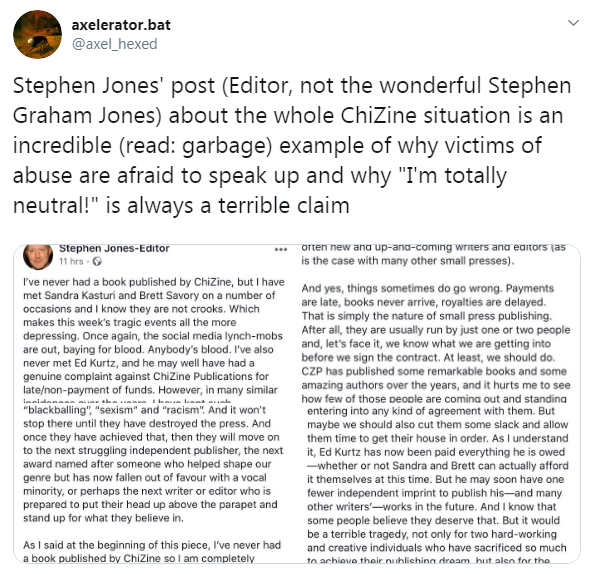
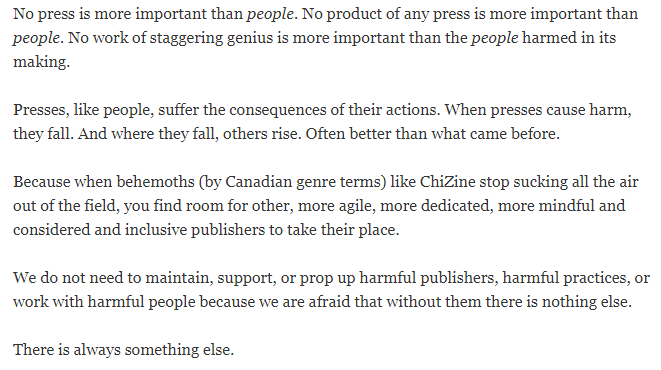
The statement from Chizine neglects a number of salient facts, such as the moment in July 2018, at Necon, when I explained to Brett Savory that my partner was facing a layoff, our cat was ill, we were in severe financial distress, and I had *never* been paid a single cent of royalties in what was at that time almost two years for a moderately successful book. He actually grinned and said, "Things are hard for everyone right now" before walking away. The following morning it was reported to me that Sandra was loudly complaining in the dealer room about me having asked about my royalties, and of course the two of them went on a whirlwind trip around the world a few weeks after that, showing us all that things weren't so rough for them, after all.Kurtz's experience was not isolated.
In fact, I'd asked after my royalties several times and was rebuffed or given excuses every single time (usually something wrong with their accounting software or something similar, which I later learned they’d been saying to authors for years). I only went to the HWA after several other frustrated CZP authors (one of whom hadn't been paid in five years!) strongly encouraged me to do so. I expressed fear of bullying and/or retaliation, and some of these authors promised me they'd have my back (they didn't). And yes, a lot of us got paid through my efforts, though it is untrue I'm paid in full. I was never paid royalties for the months of my first year of publication, 2016, though CZP continues to claim I was. I just gave up on this.
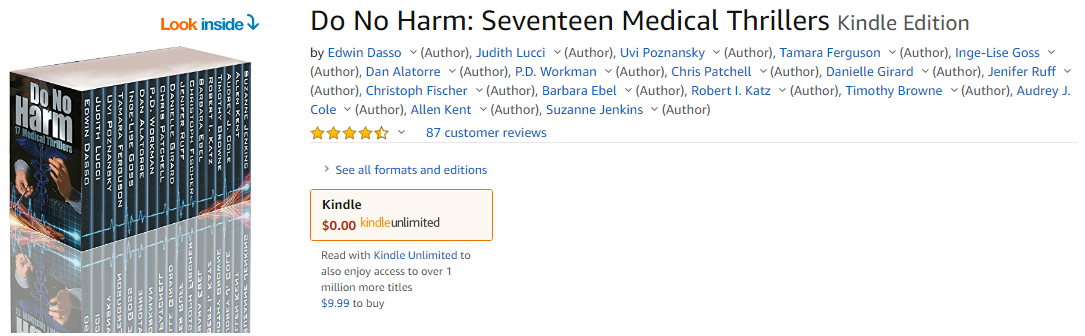
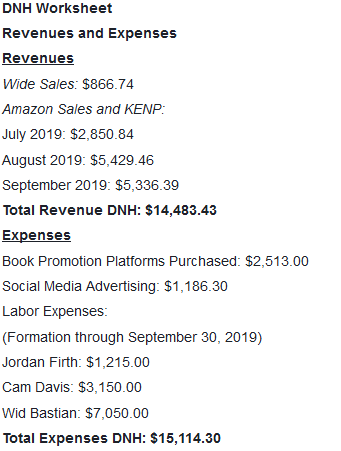
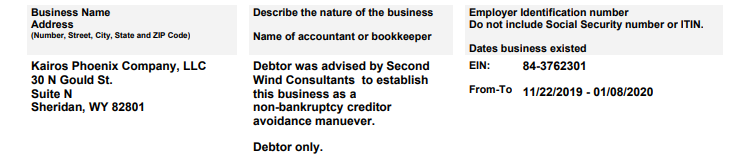
For the purposes of the USA Today Bestseller Medical Thriller Author Publishing Collaborative Boxed Set program, Genius Media shall not incur any publication and promotion expenses of any nature in excess of the fees paid under the terms of its author agreements and shall have no power to obligate [redacted] or any other author for any publication and promotion expense above author fees paid whatsoever.There's a "cash call" prohibition and an expense cap. But Kairos wanted writers to believe otherwise, so it could inflate expenses and ensure a loss.
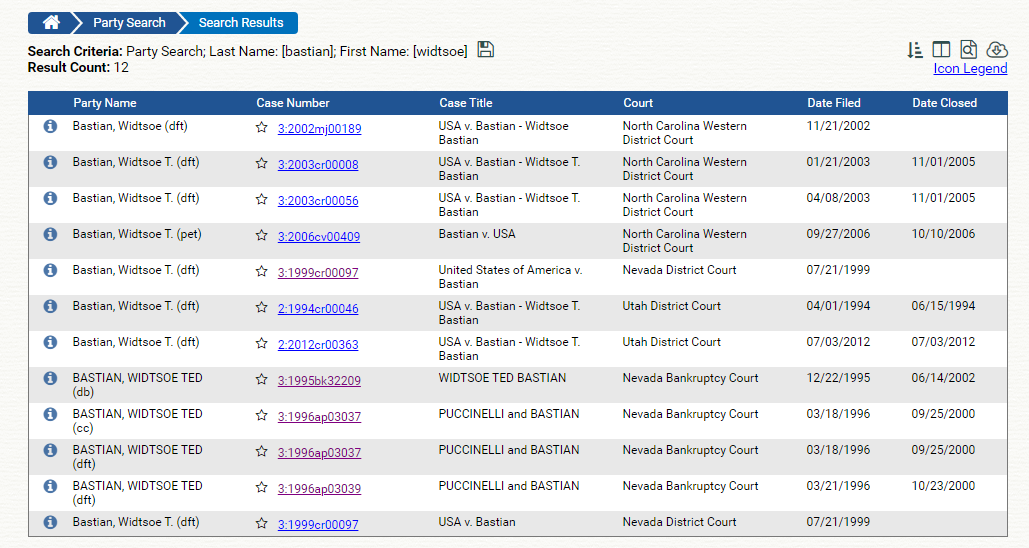
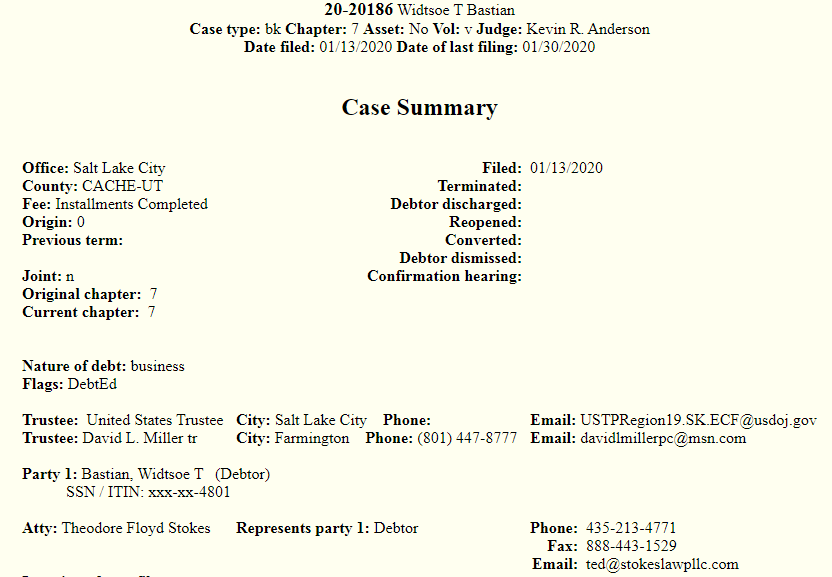
In 2013-15, I hired Mr. Bastian as a ghost writer and later co-author of a novel we wrote together called Henry and Tom, sold through Amazon/Kindle Direct Publishing (KDP).You'll note a reference to a bankruptcy. Wid Bastian filed a Chapter 7 bankruptcy petition on January 13, 2020.
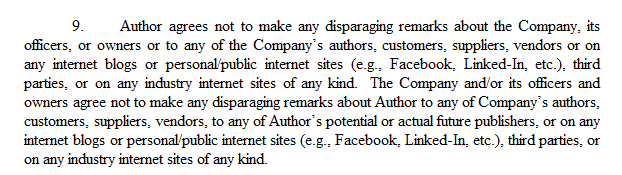
In mid 2015, Mr. Bastian embezzled money from a joint bank account we opened to pay for marketing campaigns for Henry and Tom. Rather than pursue embezzlement charges, I hired an expensive lawyer in Washington DC to transfer all rights for Henry and Tom to me in exchange for a $4K payment to Wid and a non-disparagement clause for both of us. This seemed at the time like the most expedient and cost effective way to deal with all the problems Mr. Bastian had caused.
I thought this matter was concluded until recently when Amazon/KDP informed me that a debt collection firm had placed a lien on Henry and Tom due to a bankruptcy filed by Wid Bastian/Genius Media Inc. KDP is currently sending my royalties to the collector per the lien. I have filed formal complaints with Attorneys General in Connecticut, New Jersey, and New York in an attempt to have the lien removed in states where the debt collectors are registered. I have also filed formal complaints against Wid and Genius Media Inc. with the Attorney General of Utah and the County Attorneys Office in Providence, Utah.
I think blogs like this are creating awareness of the depth and extent of Wid’s continuing criminal activities so we can all work together to stop him from doing this to others and get him to face justice.
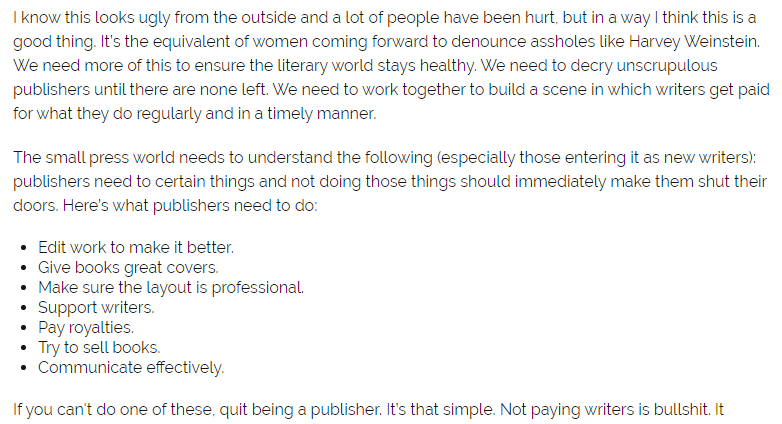
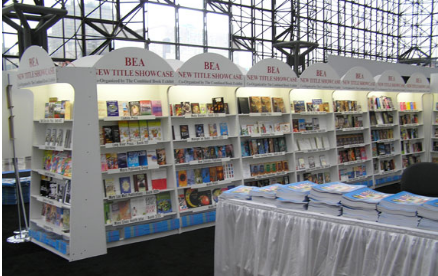
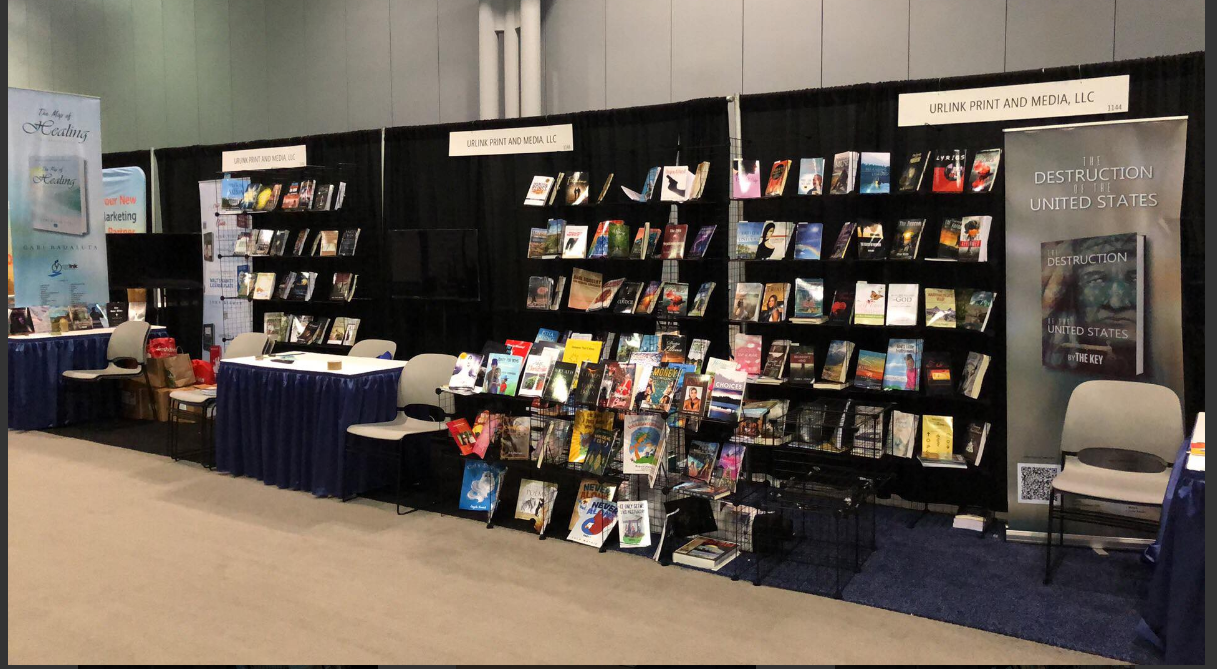
Aside from the Author Market [a designated area of the exhibit floor where self-published authors can buy display space], there are a handful of opportunities for authors to get visibility for their work at BEA. As far as I’m concerned—as someone who attended this show for 10 years, mainly as an editor with a traditional publishing house—it is not worth the investment. Here’s why.I'll add a fourth consideration: You will likely be hugely overcharged, especially by companies that sell book fair packages, or re-sell the exhibit services of others.
The emphasis of the show is on traditional publishing, rights sales and pre-publication marketing, and does not favor indie title promotion. It is a New York industry event where traditional publishing insiders talk to other traditional publishing insiders. Yes, there are librarians and booksellers, but they’re rarely paying attention to the places where an indie book may be showcased or promoted.
Nobody is going to notice your book there. Your book is likely to be promoted with many other books, with no way of attracting attention even if someone did pause for a second within 50 feet of your book. Imagine setting a copy of your book down in the world’s largest book fair, and expecting someone to not only notice it, but be entranced by it so much they can ignore 10,000 other things happening at the same time.
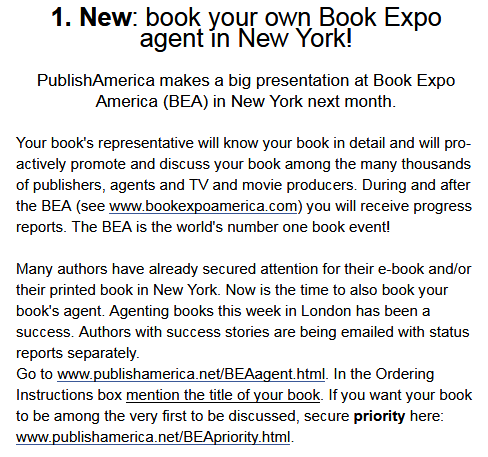
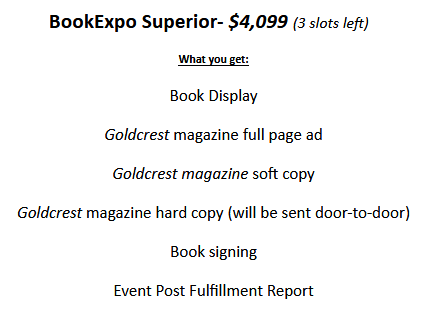
If you—the author—are not present to advocate for it, your book doesn’t stand a chance. Services that offer to promote your book at BEA are rarely, if ever, hand-selling or promoting your book in a meaningful way. But they will be happy to cash your check and say that your book had a “presence” at BEA. If you want to satisfy your ego, go ahead. But it’s not going to lead to meaningful sales. (I challenge anyone in the comments to provide evidence that a self-published book gained traction at BEA because the author paid a fee to secure placement—and the author was not present.)
Dear ________,A number of the cancellations affected books that had been completed, turned in, and scheduled for publication, with some authors having already made promotional plans. Others interrupted series whose first installment hadn't yet been published--with Henery holding on to the yet-to-be-published book and reverting rights to the rest. Cancellation of a series before it's completed can be tough--another publisher may not want to buy into a series mid-stream, and while followup titles can be self-published, it's difficult to promote a series when it's split up like this.
Before entering 2020, we felt it prudent to review future projections for _______ series, taking into consideration recent releases and overall performance. To provide an unbiased professional opinion and guidance in our 3-year strategic plan, we hired a consulting firm with experience in the industry. This allowed us to analyze not only your specific series, but also the competitive landscape and industry as a whole.
Unfortunately the sales of _______ series do not justify the publication of future titles beyond 2020. We know this is disappointing. The market has become beyond saturated (especially in mystery fiction), with all leading indicators pointing to even more intense competition for consumer dollars in the next cycle and beyond....
Although we don’t have a pathway forward with your new titles, we will continue to sell and support your backlist titles as usual under the terms of our original publishing agreement. To be clear, we will not be reverting the rights on any of your already published title(s), only future titles specifically outlined in the addendum to follow in the next week.