hi
this shit sucks
Today on Married To The Sea: this shit sucks
The Worst Things For Sale is Drew's blog. It updates every day. Subscribe to the Worst Things For Sale RSS!

To develop a successful marketing plan, you must know your target customers. With this knowledge, you can increase sales and improve profits. One way to ...
The post How to Segment Your Customer Demographics in a Marketing Plan appeared first on Saleschase Stories.
No doubt — this is a crazy, scary, sad, worrying time for everyone. Most of us are sheltering in place and trying our best to adjust to a new reality. While we are not performing heroic deeds like all the frontline healthcare workers and first responders, grocery store employees and delivery drivers, we can all … Continue reading nine cool things on a tuesday (stay home, save lives edition)
| Terrible building on Tower Ro |
| Terrible example on Tower Road |
| Beautiful building on Tower Road |
| Villa Aurora on Tower Road |
History of Lisp (The history of LISP according to McCarthy's memory in 1978, presented at the ACM SIGPLAN History of Programming Languages Conference.)
This is such a fun paper which I couldn't find on LtU. It's about the very early history of programming (1950s and '60s), back when things we take for granted today didn't exist yet.
On taking apart complex data structures with functions like CAR and CDR:
It was immediately apparent that arbitrary subexpressions of symbolic expressions could be obtained by composing the functions that extract immediate subexpressions, and this seemed reason enough to go to an algebraic language.
On creating new data, i.e. CONS:
At some point a cons(a,d,p,t) was defined, but it was regarded as a subroutine and not as a function with a value. ... Gelernter and Gerberich noticed that cons should be a function, not just a subroutine, and that its value should be the location of the word that had been taken from the free storage list. This permitted new expressions to be constructed out of subsubexpressions by composing occurrences of cons
On inventing IF:
This led to the invention of the true conditional expression which evaluates only one of N1 and N2 according to whether M is true or false and to a desire for a programming language that would allow its use.
On how supreme laziness led to the invention of garbage collection:
Once we decided on garbage collection, its actual implementation could be postponed, because only toy examples were being done.
You might have heard this before:
S.R. Russell noticed that eval could serve as an interpreter for LISP, promptly hand coded it, and we now had a programming language with an interpreter.
And the rest is history...
The transcript of Three Things I Wish I Knew When I Started Designing Languages, a talk given by Peter Alvaro somewhere or other, is up at Info Q.
Peter Alavaro's main research interest is in taming distributed systems. He starts his talk with the provocative thesis, "In the future, all radical new languages will be domain-specific languages." He talks of the evolution of his ideas about dealing with distributed systems:
He summarises by saying the only good reason to design a programming language (I assume he means a radically novel language) is to shape your understanding of the problem. No regrets of being the only user of his first language, Datalist, because the point is that it shaped all his later thought in his research.
Histogram: You have to know the past to understand the present by Tomas Petricek, University of Kent
Programs are created through a variety of interactions. A programmer might write some code, run it interactively to check whether it works, use copy and paste, apply a refactoring or choose an item from an auto-complete list. Programming research often forgets about these and represents programs as the resulting text. Consequently, thinking about such interactions is often out of scope. This essay shifts focus from programs to a more interesting question of programming.
We represent programs as lists of interactions such as triggering an auto-complete and choosing an option, declaring a value, introducing a variable or evaluating a piece of code. We explore a number of consequences of this way of thinking about programs. First, if we create functions by writing concrete code using a sample input and applying a refactoring, we do not lose the sample input and can use it later for debugging. Second, if we treat executing code interactively as an interaction and store the results, we can later use this information to give more precise suggestions in auto-complete. Third, by moving away from a textual representation, we can display the same program as text, but also in a view inspired by spreadsheets. Fourth, we can let programmers create programs by directly interacting with live previews as those interactions can be recorded and as a part of program history.
We discuss the key ideas through examples in a simple programming environment for data exploration. Our focus in this essay is more on principles than on providing fine tuned user experience. We keep our environment more explicit, especially when this reveals what is happening behind the scenes. We aim to show that seeing programs as lists of interactions is a powerful change of perspective that can help us build better programming systems with novel features that make programming easier and more accessible. The data exploration environment in this interactive essay may not yet be that, but it gives a glimpse of the future.
| ISBN13 | Title | Author | Promo Type | Country | Start Date | End Date | Promo Price |
|---|---|---|---|---|---|---|---|
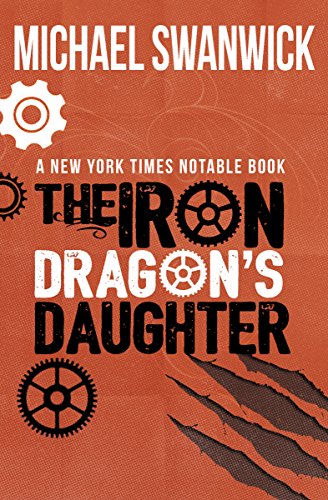
| 9781504025669 | The Iron Dragon's Daughter | Swanwick, Michael | ORM - Portalist NL | US | 2020-04-01 | 2020-04-01 | $1.99 |
| 9781504025669 | The Iron Dragon's Daughter | Swanwick, Michael | ORM - Portalist NL | CA | 2020-04-01 | 2020-04-01 | $1.99 |
| Newsletter | Link |
|---|---|
| Early Bird Books | Subscribe Now |
| The Lineup | Subscribe Now |
| The Portalist | Subscribe Now |
| Murder & Mayhem | Subscribe Now |
| A Love So True | Subscribe Now |
| The Archive | Subscribe Now |
| The Reader | Subscribe Now |
Keesmaat’s Next Venture, Shitty Architecture Men, Mod Squad, Presto Problemo, Bench Press, and more in this debut edition.
Another Glass Box is a weekly roundup of urban design news in Toronto (and occasionally beyond), in bite-size pieces. It’s curated by Dan Seljak, who’s done marketing and communications work for architecture and construction companies for the last seven years—and who still loves this city enough to line up for brunch. Content warning: some of the […]
The post Introducing: Another Glass Box, a new weekly architecture feature appeared first on Torontoist.
In 2008, a few friends in Vancouver recognized that a voice was missing from reporting in our country. National news was increasingly international in nature. Provincial was disappearing. And, local seemed out of touch with its audience. So, they started writing the kind of content they wanted to read. Hyperlocal stories aimed at helping people […]
The post Torontoist has been acquired by Daily Hive appeared first on Torontoist.
Becky Lynch has become the Superstar with the most total days as Raw Women’s Champion, surpassing Alexa Bliss.
Michigan football coach Jim Harbaugh penned a two-page open letter advocating flexibility for college athletes looking to enter the NFL Draft.
Crazy-seeming research, every now and then, leads to something really, really wonder-filled. In this case, the discovery of something long-predicted (by Einstein) but seemingly impossible to perceive: gravity waves. (HT Maggie Lettvin)
Vi Hart, adept at mathematics, music, and explaining things, made this video that explains the point (and the lack of point, too) of 12-tone music: